
Regional overview
Countries & Territories
In 2024, Africa experienced significant developments in rule of law, security and human rights. It was a super-election year, with 25 percent of the world’s elections occurring on the continent, testing democratic resilience and governance. Peaceful transitions in Ghana and Namibia showcased democratic progress, while Mozambique’s disputed election highlighted vulnerabilities, underscoring the fragility of electoral processes.
Africa continued to follow the global pattern of declining rule of law. According to the World Justice Index, 57 percent of nations showed a downward trend. This global decline is often characterized by diminished constraints on government powers and weakened protection of fundamental rights, issues that are prevalent in politically unstable regions of Africa, such as the Democratic Republic of the Congo (DRC), Ethiopia and Mali.
A worrying rise in military coups d’état and unconstitutional power transitions continues to challenge the rule of law in Africa, notably in countries such as Chad, Gabon and Guinea, and several members of the Alliance of Sahel States (AES). These actions destabilize political systems, erode public trust and hinder democratic processes. In several countries, political polarization and weak institutional frameworks have exacerbated tensions, limiting progress on democratic governance and human rights protections. UNDP’s work remains focused on strengthening resilience, supporting inclusive dialogue and ensuring that justice institutions remain functional and accessible despite these challenges.
Transitional justice processes played a critical role in addressing Africa’s legacies of conflict and human rights violations. The African Union's Transitional Justice Policy guided efforts to embed transitional justice into national contexts, prioritizing inclusive processes that engaged youth and women. South Sudan and the Gambia, for example, advanced in establishing truth-telling, reparations and institutional reform mechanisms.
UNDP remained at the forefront of advancing the rule of law, justice and human rights across Africa. Its partnerships with the African Union (AU), African Commission on Human and People’s Rights (ACHPR), International Development Law Organization (IDLO), Cordaid, UN Women and the Pathfinders for Peaceful, Just and Inclusive Societies (Pathfinders) have strengthened efforts to promote inclusive, people-centred justice and transitional justice initiatives across the continent. For example, UNDP and the AU jointly launched regional training on transitional justice policy implementation and collaborated with ACHPR to support state reporting on human rights compliance.
At the country level, UNDP worked with national governments and civil society organizations to implement programmes that address critical justice and human rights challenges. In Madagascar, UNDP supported the development of frameworks to improve human rights due diligence in the mining sector, addressing governance challenges tied to natural resource management. Liberia’s justice system received targeted support to advance transitional justice and strengthen the rule of law, while in Kenya, efforts focused on comprehensive police reform to enhance accountability and community trust. In Guinea-Bissau, justice initiatives prioritized accessibility and inclusivity, ensuring marginalized groups have greater access to legal remedies.
In 2024, transitional justice remained a cornerstone of UNDP’s work, providing a pathway to reconciliation, accountability and sustainable peace. UNDP collaborated with the AU on a joint work plan to guide the implementation of the transitional justice processes across Africa. Such platforms as the African Youth for Transitional Justice (AY4TJ) and African Women for Transitional Justice were established, amplifying the voices of youth and women in shaping transitional justice strategies and fostering inclusive participation.
UNDP’s focus on people-centred justice underscored the importance of tailoring justice systems to the realities of local communities. In Angola, Guinea-Bissau and Tanzania, UNDP supported national partners to align national justice systems with global and regional frameworks, prioritizing inclusivity and accessibility for marginalized populations. Collaboration with UN Women and other partners ensured a gender-sensitive approach to justice reforms, while Pathfinders resources supported evidence-based policy development to foster just and inclusive societies.
The Business and Human Rights (B+HR) agenda continued to gain momentum, reflecting Africa’s growing commitment to align with international responsible business standards, such as the UN Guiding Principles on Business and Human Rights (UNGPs). Liberia followed Ghana, Kenya and Uganda in adopting a National Action Plan on Business and Human Rights (NAP), while Ethiopia, Malawi and Tanzania advanced their NAP processes. These efforts align with broader regional frameworks such as the African Continental Free Trade Area (AfCFTA) and the African Union’s Agenda 2063, underscoring the need to harmonize NAPs with economic and governance priorities.
The following examples illustrate the results on Business and Human Rightsachieved through the direct support from UNDP’s Global Programme for Strengthening the Rule of Law, Human Rights, Justice and Security for Sustainable Peace and Development (the Global Programme).
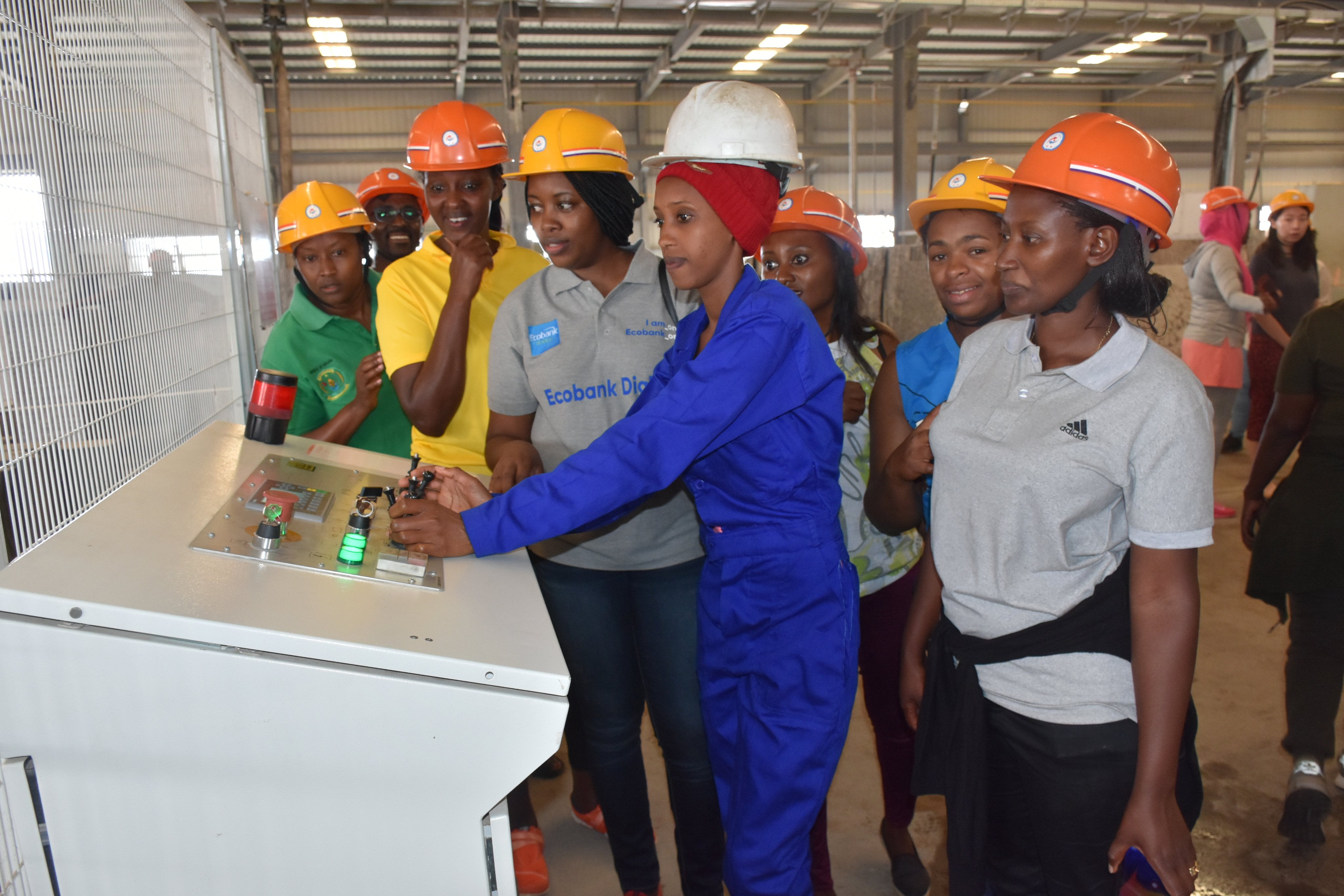
In Rwanda, young women are entering professions that were once dominated by men, including roles like machine operation.
In Rwanda, an assessment of the status of business and human rights was conducted in 388 private companies, this served as a basis for a capacity building programme and provided critical information for the ongoing preparation of the NAP on B+HR. In collaboration with the National Commission for Human Rights (NHRC), UNDP organized training for 90 participants, of whom 33 were women, including NCHR staff and private sector representatives. Furthermore, an inclusive and gender-sensitive communications strategy was developed to increase awareness on B+HR among diverse audiences. Finally, UNDP supported a workshop on the NAP process in Rwanda, engaging the NHRC, trade unions and civil society.
In Senegal, the Human Rights Department of the Ministry of Justice, in partnership with the National Human Right Commission, organized national consultations on business and human rights in the strategic regions of Thiès, Saint-Louis, Kédougou and Fatick, where allegations of human rights violations linked to business activity are rife. These inclusive consultations engaged businesses, workers, representatives of administrative, judicial and religious authorities, community leaders, civil society organizations (CSO’s), and communities, associations or groups of people affected by business activities. This approach was instrumental in identifying the issues and challenges in the regions and approaches to developing the relevant policies to address them.
In Tanzania, UNDP supported the National Baseline Assessment to inform the NAP development. Broad consultations in various regions engaged communities affected by negative business practices, workers, small-scale miners and fisheries, trade unions, vulnerable groups, CSOs, businesses, government and development partners. In addition, the Government established thematic working groups, creating a platform for local communities and small- and medium-scale enterprises to share information and recommendations. With UNDP’s support, the Commission on Human Rights and Good Governance drafted the NAP which was presented to the National Steering Committee.
Looking forward
In 2025, Africa’s regional priorities will include deepening efforts in transitional justice, people-centred justice and business and human rights. Opportunities lie in strengthening regional collaboration, scaling innovative programmes and integrating digital technologies into justice systems. Such challenges as political instability and resource constraints will need to be mitigated. By fostering innovation and leveraging partnerships, Africa can continue shaping global conversations on justice and human rights, advancing its steadfast commitment to accountability, sustainability and equitable development.
-
Further information is available through the African Union Transitional Justice Policy (2019) and national truth commission reports, such as those from The Gambia’s Truth, Reconciliation and Reparations Commission.