

Fiji
Countries & Territories


Key results
- The police shifted from a "warrior" to a "guardian" approach, prioritizing protection and engagement. This included reforms in community policing strategies, emphasizing respect for human dignity and building trust within communities.
- The Ministry of Home Affairs and Immigration increased the budget of the Fiji Police Force by US$41 million (18 percent) compared to the previous budget period to ensure its full reset and modernization.
- To leave no one behind, a community policing model was designed for Indigenous coastal communities, such as I-Taukei villages in the rural areas, to prevent crimes and enhance security at the coast and surrounding maritime areas. This new model integrates formal governance structures with traditional customary practices.
For decades, the security sector in Fiji had faced issues with the law enforcement sector, amid overall public distrust towards security institutions. The 2022 general elections and consecutive leadership changes within the Fiji Police Force (FPF) and the Ministry of Home Affairs brought a new national vision and priorities that included transparency, police professionalism and accountability, as well as community engagement. To respond to this political and societal demand, UNDP launched the Restore Blue Review project funded through the Global Programme for Strengthening the Rule of Law, Human Rights, Justice and Security for Sustainable Peace and Development. The aim of this intervention was (1) to facilitate confidence building between the people of Fiji and the FPF through community-oriented policing, and (2) design and operationalize polices and structures that would create an environment for human rights-based policing and good governance in the FPF.
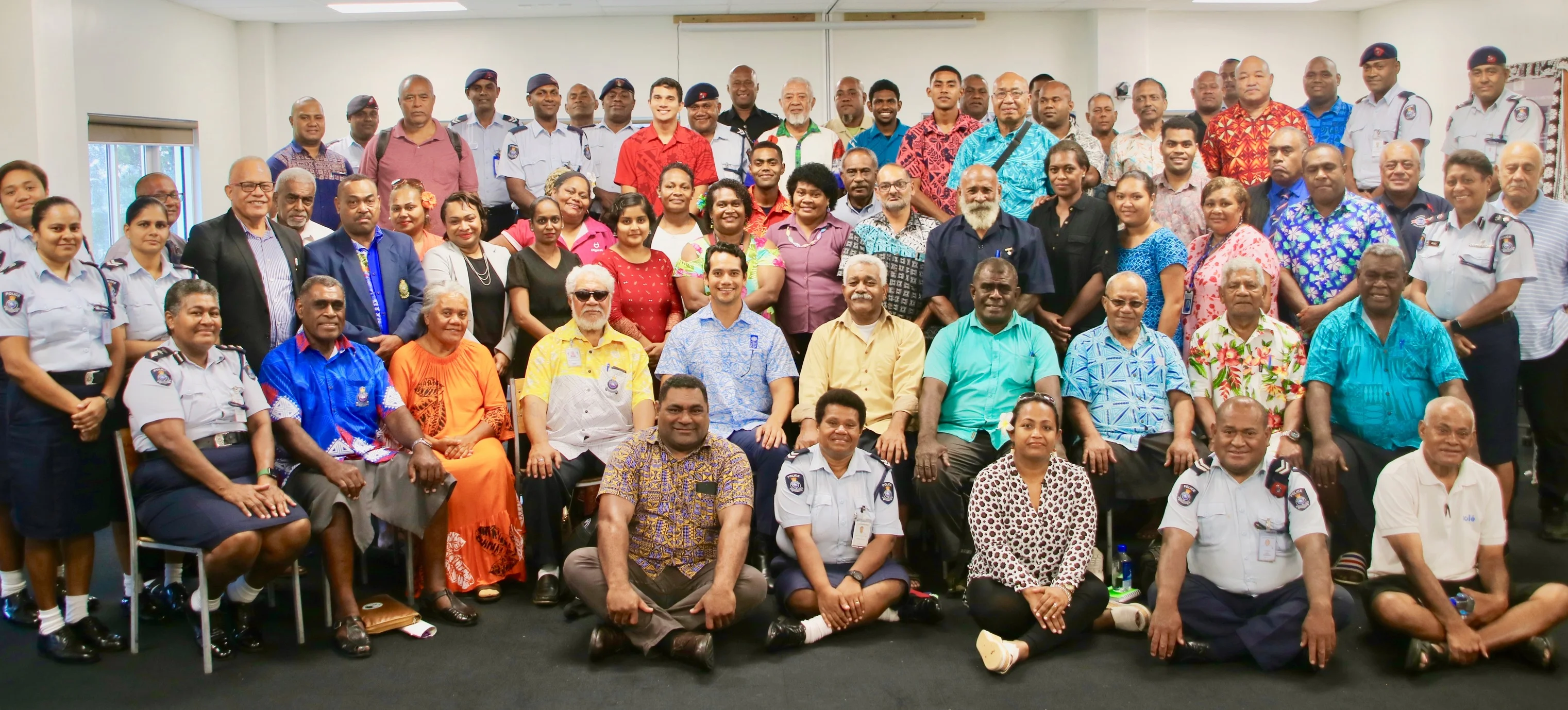
Police-community consultations at Nakasi police station in Fiji.
Comprehensive research was conducted to identify key challenges within the FPF and propose culturally appropriate reforms that align with modern policing standards. The research entailed close consultation with communities, including Indigenous traditional leaders, women, youth and faith-based organizations. In addition to community engagement sessions, a survey was conducted in Suva City, where over 100 citizens provided feedback to gauge public perception of policing. This inclusive approach ensured that diverse perspectives, including from rural and remote areas, shaped the proposed policy directions.
The research also touched on the importance of gender balance within the FPF, emphasizing the need for more equitable recruitment and retention practices. It highlighted the criticality of increasing women's representation in both rank and leadership positions to foster more inclusive and effective policing. This effort to ensure gender-sensitive law enforcement aligns with Fiji’s broader national priorities for gender equality and human rights. The recommendations include targeted recruitment strategies aimed at increasing female participation in policing, particularly in decision-making roles, which will enhance the FPF’s ability to address community safety issues more holistically.
The findings emphasized the need for a shift from enforcement-focused policing to a "guardian" model that prioritizes protection and engagement. Having formally accepted the research, the Ministry of Home Affairs directed it to the FPF for the implementation of recommended reforms, supported by dedicated budget allocations. Notably, the FPF budget for 2024-2025 was increased by US$41 million (18 percent) compared to the previous budget period to ensure its full reset and modernization.
This step demonstrates a high-level commitment to reform, ensuring that the changes are institutionalized within the FPF. This commitment is critical for sustaining the momentum of reform efforts and aligning the FPF with national and international standards for democratic policing. Ultimately, the transition to a guardian model sets the foundation for long-term improvements in public trust, safety and the overall effectiveness of law enforcement in Fiji. The research findings and recommendations will be also used as the foundation for developing the Fiji Police Academy’s community policing training curriculum as well as the human rights-based policing curriculum.
The implementation of the Restore Blue Project has benefited significantly from the collaboration with the Ministry of Home Affairs and Immigration and the FPF, ensuring the project’s alignment with national priorities and fostering a sense of ownership among key local partners. In addition, UNDP engaged with civil society organizations, such as the Fiji Council of Social Services (FCOSS) and the Fiji Women’s Crisis Centre to gather essential feedback on policy development for policing. These collaborations have provided valuable insights into community perspectives and needs, particularly concerning gender equality and social justice issues.
The project has also advanced specific policies aimed at reforming the FPF, including the Community Policing Policy, which focuses on fostering trust and collaboration between the police and communities. The Review of FPF Human Resource and Administration Processes aims to enhance operational efficiency, while training initiatives such as Police Training and Human Rights and the Eight-Step Guide to Implement Human Rights-Based Policing in the FPF equip officers with the skills to uphold human rights standards in their practices. Furthermore, the emphasis on police leadership seeks to develop leaders committed to democratic principles and community engagement. Collectively, these policies and training programmes reflect a comprehensive approach to institutional reform, targeting both operational effectiveness and the promotion of human rights within Fiji’s policing framework.
To adapt the police reforms to Fiji’s unique context, a community policing model was designed for Indigenous coastal communities, such as I-Taukei villages in the rural areas, to prevent crimes and enhance security at the coast and surrounding maritime areas. This new model integrates formal governance structures with traditional customary practices.
A significant milestone in 2024 was the signing of a Memorandum of Understanding (MoU) between the Governments of Australia and Fiji to support further implementation of Restore Blue. The MoU reinforces bilateral cooperation on democratic policing, institutional strengthening and community safety, and serves as a key platform for scaling successful elements of the project nationally. The agreement further reflects international confidence in the Fiji Police Force’s reform trajectory and underscores the strategic importance of Restore Blue as a flagship model for Pacific policing transformation.
Looking forward
To continue the police reform and to emphasize community-centred policing, the Minister of Home Affairs and Immigration launched the Restore Blue Phase 2, a nationally owned blueprint towards rights-based policing. UNDP will provide support to its national partners, including government agencies and civil society, to encourage greater citizen involvement in safety and security initiatives, leading to a more responsive and accountable police force.