
Bolivia
Countries & Territories


Key results
- In cooperation with national stakeholders, including local Indigenous communities, UNDP created a governance platform for inclusive decision-making on lithium extraction. The platform enabled a participatory and inclusive process through which a draft law for the exploitation of lithium was developed.
- An artificial intelligence (AI) system was designed to assess lithium extraction's impact on water, sanitation and local industries, based on official data and integrating conflict analysis.
- A strategic plan for a Regional Lithium Observatory was drafted, engaging academic institutions and UNDP Country Offices from Bolivia, Chile and Argentina to address environmental justice and prevent conflicts in the region.
In Bolivia, such salt flats as Coipasa, Uyuni and Pastos Grandes are transitioning from tourism destinations to mining hubs, with significant potential for urban development. However, Bolivia's lithium extraction landscape is shaped by political disagreements among the key branches of government and civil society stakeholders over strategic decision-making authority. At the same time, social and environmental tensions – often leading to violent conflicts – arise as communities near lithium reserves demand effective participation, as well as better legislation and regulations for responsible and sustainable extraction. In 2024, the President entrusted the Ministry of Hydrocarbons and Energy, in coordination with the Ministry of the Presidency, to oversee lithium extraction.
To prevent environmental conflicts, address impacts on the right to a healthy and sustainable environment and foster local economic empowerment, including for Indigenous Peoples, UNDP implemented a preventive and anticipatory governance project on the mining and energy sector based on environmental justice, political economy and conflict transformation, as principles of a new and more sustainable way of exploiting natural resources. The project received support through UNDP’s Global Programme for Strengthening the Rule of Law, Human Rights, Justice and Security for Sustainable Peace and Development (the Global Programme).
To promote national dialogue on lithium exploitation and industrialization, foster sustainable agreements and to ensure policies reflect the needs of local populations, UNDP collaborated with national partners, including government, civil society, academia and the Indigenous Autonomous Government of Salinas (the salt flats). Strategic partnerships were formed with the Ministry of Hydrocarbons and Energy, the Ministry of the Presidency and the Office of the Ombudsperson to support conflict prevention, human rights and environmental justice initiatives in the region.
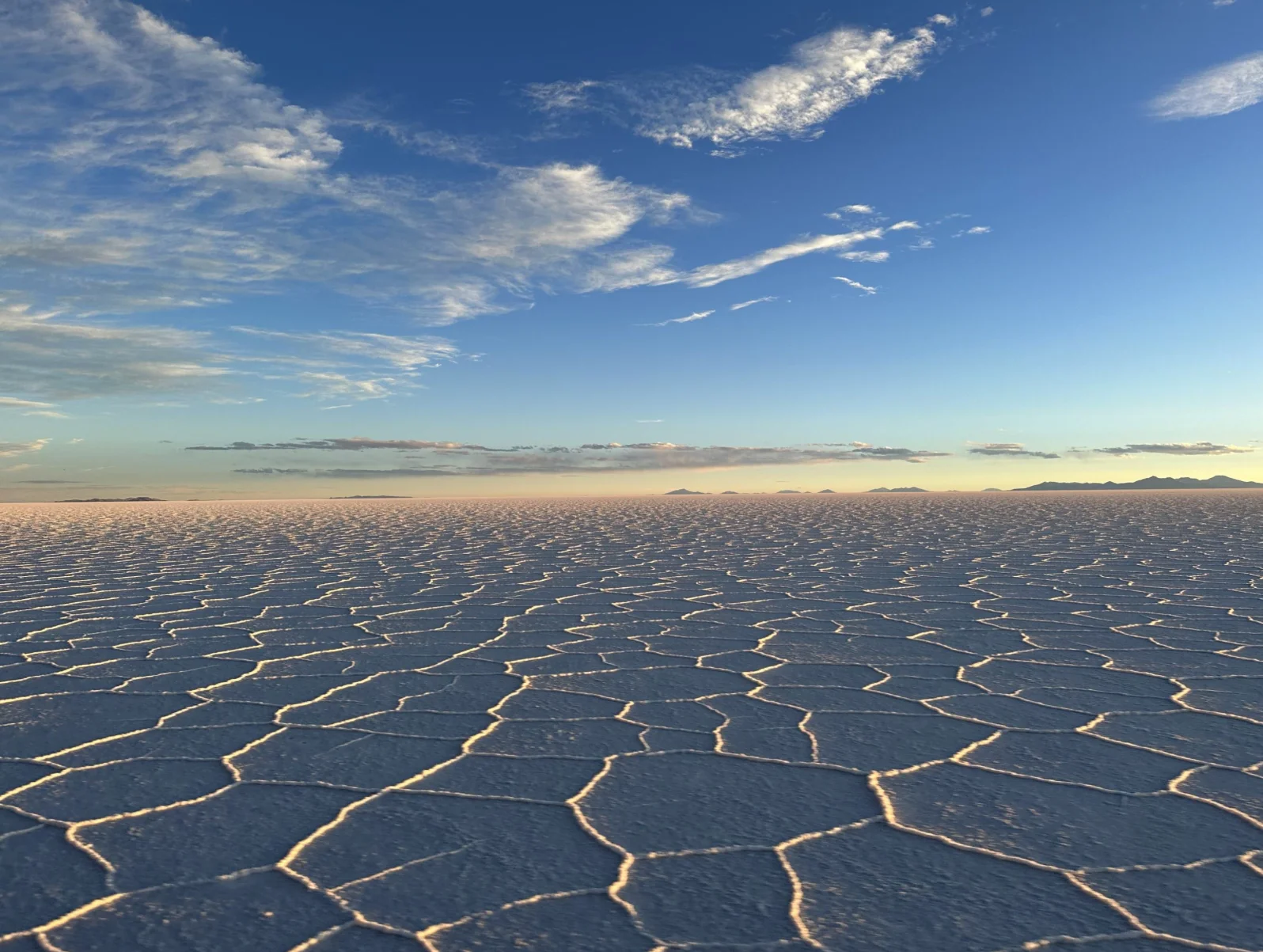
Salt flats in Bolivia, are transitioning from tourism destinations to mining hubs.
The project delivered three major outcomes:
Lithium governance platform. UNDP helped create a platform that allows all stakeholders to participate in decision-making, with veto power. Focused on environmental justice, the platform promotes dialogue among the government, civil society, Indigenous Peoples and youth. It brought together the Ministry of Hydrocarbons and Energy, the Office of the Ombudsperson, Indigenous and local governments, academia, associations of workers from different regions and local communities of the salt flats.
Through this platform, a draft law for the exploitation of lithium and evaporite resources (a so-called Lithium Law proposal) was submitted to the Plurinational Legislative Assembly (national legislature) previously discussed with the Vice-Presidency of the Plurinational State of Bolivia. The platform allowed for the inclusive lawmaking process that engaged affected communities.
In the salt flats area, a platform on territorial management for the Indigenous Autonomous Government of Salinas was also consolidated, responding to its autonomy challenges.
Evidence-based decision-making. Using AI, UNDP developed a system to assess the medium and long-term impacts of lithium extraction on water, sanitation and productivity sectors. The AI system integrates official state data on meteorology, infrastructure, social conditions, cultural and ancestral heritage and others, covering a 300 x 500 km area around the Uyuni and Coipasa salt flats. The system generates 60-year projections on water usage and its effects on local industries, including camelid farming, mining and quinoa production. In addition, this tool incorporates on-site data on conflicts triggered by lithium extraction. Conflict-related information from local residents and from the Ministry of Hydrocarbons and Energy was accumulated and analysed by the AI system for monitoring, early warning and conflict analysis.
Environmental Governance Diploma. In partnership with the Center for Research on Economic and Social Development at the Higher University of San Andrés (CIDES-UMSA), known for its work on lithium and extractive industries, UNDP launched an academic programme focused on lithium extraction and governance, providing a platform for technical knowledge and discussions. In addition, through partnership with CIDES-UMSA, a strategic plan for a Regional Lithium Observatory was developed, engaging academic institutions from Bolivia, Chile and Argentina to establish key indicators for understanding the dynamics of the salt flats and lithium extraction zones.
Looking forward
UNDP will continue supporting Bolivia in its sustainable lithium development, focusing on consolidating the Lithium Governance Platform to ensure it is sustainable and effective; enhancing evidence-based decision-making by refining and expanding the AI-driven impact assessment system to include more detailed social and economic indicators, thereby improving the accuracy and comprehensiveness of projections; scaling up capacity building and knowledge sharing, including through the establishment and operation of the Regional Lithium Observatory, fostering collaboration among academic institutions and governmental agencies across Bolivia, Chile and Argentina. Finally, the lessons learned from this project will be disseminated to other countries facing similar challenges in balancing resource extraction with environmental sustainability and social equity.
-
Brújula Digital, “Recordando la fallida negociación con la Lithco”, 17 February 2025. Available at http://brujuladigital.net/economia/2025/02/17/recordando-la-fallida-negociacion-con-la-lithco-43261