
Bangladesh
Countries & Territories


Key results
- The Digital Witness Deposition Mechanism established in five courts in Cox’s Bazar allows for recording, reviewing and analysing witness testimonies, laying the groundwork for sustained improvements in judicial efficiency.
- To offer a sustainable community-driven conflict resolution mechanism and build on practices embedded in Bangladeshi rural culture, UNDP revitalized Mediation Forums in six unions of Ukhiya and Teknaf, ensuring their transparency and inclusivity. A total of 723 mediators, including 203 women, were trained, and 164 disputes were resolved in 2024.
- UNDP developed five evidence-based and people-centred Community Safety Plans in consultation with key stakeholders. These plans are a roadmap to reduce crime and social disorder in five sub-districts of Cox’s Bazar. They prioritize the needs of vulnerable groups, ensuring their concerns are addressed when undertaking security and justice measures.
In Bangladesh, UNDP’s Global Programme for Strengthening the Rule of Law, Human Rights, Justice and Security for Sustainable Peace and Development supported efforts to enhance community safety, peaceful coexistence and access to justice in Cox’s Bazar district. The influx of Rohingya refugees from Myanmar has placed significant pressure on the local communities, contributing to challenges around access to public services, land ownership disputes and growing inter-community tensions. These issues compromised safety and security, placing additional strain on the already overburdened judiciary and police. With just 24 judges in the district, over 95,000 cases were filed, exacerbating the challenge.
In response, UNDP focused on strengthening the capacity of judges and lawyers, improving mechanisms for community dispute resolution and enhancing community security and policing. After the July 2024 government transition, UNDP adapted its approach in Cox’s Bazar, working closely with the interim government and local host communities. This helped maintain trust and ensured continued support.
To strengthen the judicial system of Cox’s Bazar, UNDP built the capacity of 188 legal practitioners, including nine women: 69 civil lawyers, 75 criminal lawyers and 44 public prosecutors. Through targeted training, legal professionals were equipped with necessary skills to uphold due diligence, improve case management and advance access to justice, while fostering critical dialogue on legal reforms and witness protection.
One of the outcomes most seconded by national stakeholders is the establishment of the Digital Witness Deposition Mechanism in five courts in Cox’s Bazar. This system allows for recording, reviewing and analysing witness testimonies, laying the groundwork for sustained improvements in judicial efficiency. Based on the Ministry of Law, Justice and Parliamentary Affairs' request, UNDP and partners are exploring the nationwide rollout of the system.
To ensure that people in rural communities have access to justice and human rights, UNDP established Legal Aid Corners at Union Parishad (Union Councils) offices. Integrated into the local governance structure under the National Legal Aid and Services Act, these legal aid corners became nationally owned avenues for marginalized groups to access justice and legal services.
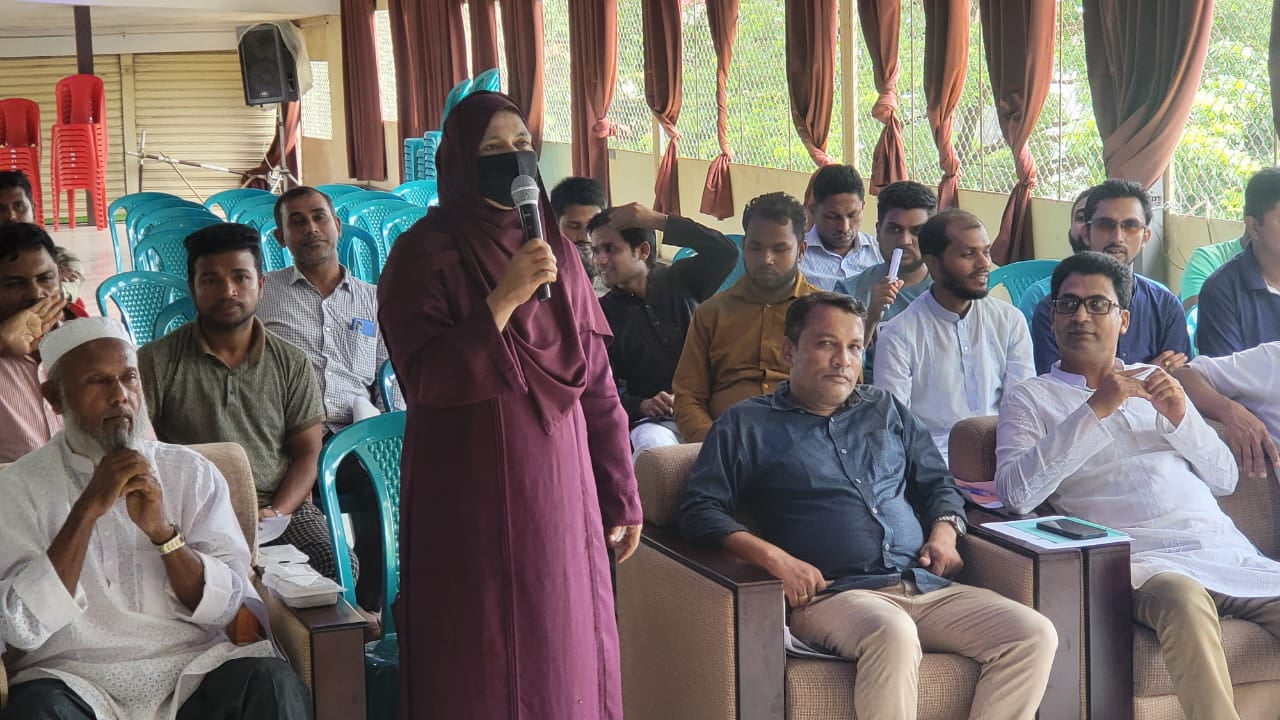
Community consultations to design community safety plans in Cox’s Bazar district of Bangladesh.
To further modernize and bolster the judicial system, UNDP convened partners to discuss legal reform, justice needs, and victim and witness protection. Two inclusive dialogues were organized in 2024, with broad participation from the judiciary, law enforcement, legal practitioners, civil society, UN agencies and other international stakeholders.
To offer a sustainable community-driven conflict resolution mechanism and to build on practices embedded into Bangladeshi rural culture, UNDP revitalized Mediation Forums in six unions of Ukhiya and Teknaf, ensuring their transparency and inclusivity. In 2024, a total of 723 mediators, including 203 women, were trained, and 164 disputes were resolved. While women showed initial interest in this initiative during consultations, their involvement was limited in the beginning, mostly due to cultural barriers. UNDP engaged with community and religious leaders to ensure greater female participation, particularly in gender-based violence prevention efforts. As a result, a specialized training on gender-sensitive conflict resolution and gender-based violence was provided to 45 women mediators, improving their capacity to address these issues and support survivors.
UNDP conducted 40 sensitization campaigns promoting social cohesion and enhancing community participation in mediation and peacebuilding across six sub-districts, focusing on gender-based violence, conflict resolution and free legal aid services. The campaigns reached 2,356 participants, including 668 women and 162 persons with disabilities.
To reduce crime and social disorder in Cox’s Bazar, UNDP developed five evidence-based and people-centred Community Safety Plans in consultation with key stakeholders such as the district police, Community Policing Forum (CPF), and community and religious leaders. These plans will be implemented in five sub-districts, prioritizing the needs of vulnerable groups and ensuring their concerns are addressed when undertaking security and justice measures. Community Policing Forums, which UNDP operationalized with national partners, have contributed significantly to preventing crime and promoting community safety, showing how cross-sectoral collaboration can create sustainable and locally owned solutions.
Notably, the youth of Cox’s Bazar was integrated into all these platforms, including Mediation Forums, Community Policing Forums, Legal Aid Committees and Union Parishad. Engaging young people as leaders and equipping them with knowledge of law, community cohesion and peaceful coexistence can strengthen peacebuilding efforts, paving the way for a more secure and prosperous society.
This UNDP project in Bangladesh benefitted significantly from an integrated approach. Close collaboration with other UNDP teams, national and international partners enabled the delivery of holistic solutions, tailored to the specific challenges faced by the host communities in Cox’s Bazar. The key partners included UNDP’s Cox’s Bazar Analysis and Research Unit (CARU), the UN High Commissioner for Refugees (UNHCR) and the International Organization for Migration (IOM). This multi-agency collaboration was essential in addressing the challenges of social cohesion, crime prevention and community resilience, leveraging the strengths of each organization to deliver more impactful results
The catalytic impact generated by this project will extend beyond its current scope. The government is interested in replicating Community Policing Forums and Mediator Forums in other areas, contributing to broader security and access to justice reforms.
Looking forward
UNDP aims to develop further initiatives based on the lessons learned and recommendations from the dialogues and outreach initiatives with justice and security stakeholders. It will focus on strengthening the Community Policing Forum, emphasizing independence, integrity and depoliticization through active community involvement. Integrating youth and women will be a priority. Additionally, to align with UNDP efforts at the national level, synergies will be built in mediation, community policing and strengthening of the judiciary.
-
The lowest tier of local administration in Bangladesh is the Union Parishad (UP), also known as the Union Council.