

Somalia
Countries & Territories


Key results
- UNDP launched the Joint Police Programme Phase II (2024–2026) and the Building Accountable and Sustainable Security (BASIS) project (2024–2025), marking a significant shift toward a people-centred approach to security by integrating community needs into security planning and improving coordination among federal and state institutions.
- Community consultations were conducted across four Federal Member States with a total of 4,472 participants, including 1,725 women, to inform the design of inclusive police and security sector reforms based on local needs and perspectives.
In 2024, Somalia continued to face complex challenges in its justice, police and security sectors, marked by fragile institutions, limited state presence outside urban centres and ongoing threats from Al-Shabaab. Despite these obstacles, incremental progress was noted in the federalization of the justice system, with steps taken toward harmonizing legal frameworks and increasing coordination between federal and member state institutions. The Somali Police has expanded community policing initiatives and undertaken capacity-building efforts, although structural weaknesses, resource constraints and human rights concerns persist. Security conditions remain volatile, particularly in southern and central regions, where conflict and displacement continue to undermine access to justice and the rule of law. International and national partners have maintained support for justice and security sector reform, but sustained political will and long-term investment remain critical to ensuring accountability, strengthening public trust and enhancing the delivery of equitable justice and security services.
Against this backdrop, UNDP launched the Joint Police Programme Phase II (JPP II, 2024-2026) and the Building Accountable and Sustainable Security project (BASIS, 2024-2025) in the Somali Federal Member States. Bringing the two under one UNDP rule of law and security portfolio ensured better coordination with and among national partners, as well as with the police and security sections of the United Nations Transitional Assistance Mission in Somalia (UNTMIS). These initiatives marked a shift towards a people-centred approach to security, emphasizing the integration of community needs into security planning.
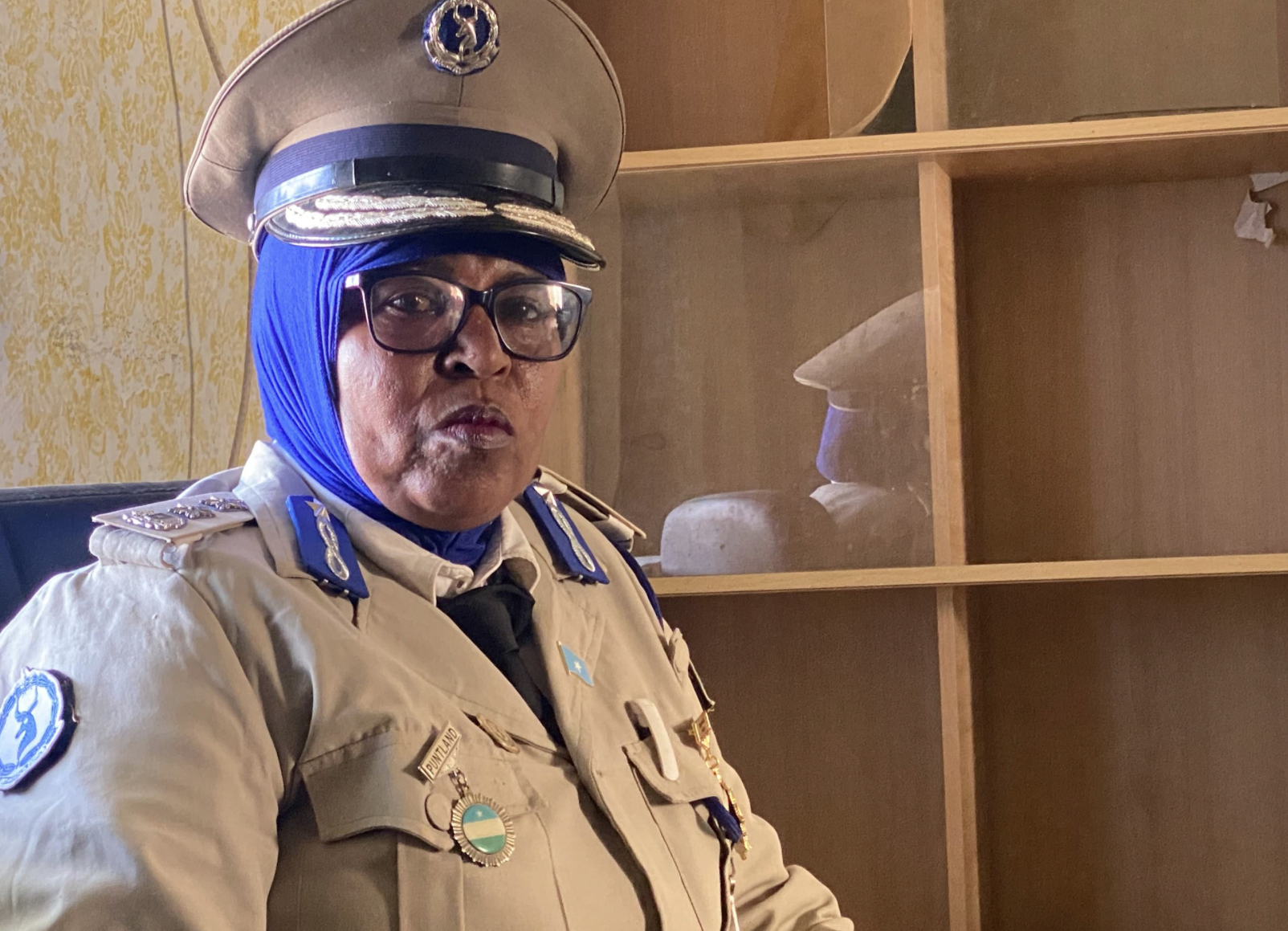
In Somalia, through the Joint Police Programme (JPP), UNDP, UN Women and UNTMIS are working together with the federal and state level governments to enhance capacity of the police and build strong community-police ties.
The projects are designed to enhance the ownership and accountability of both state and federal police and security institutions. By involving key stakeholders, including ministers from state and federal Ministries of Internal Security, the governance model ensures more comprehensive decision-making processes. This approach not only strengthens collaboration between different levels of government but also fosters more inclusive and sustainable reforms within the Somali Police and security apparatus.
Until recently, security development in Somalia has primarily focused on force generation and militarization. Through the project supported by the Global Programme for Strengthening the Rule of Law, Human Rights, Justice and Security for Sustainable Peace and Development, UNDP encouraged Federal Member States (FMS) Ministries of Internal Security to integrate community needs into future planning for permanent policing services. The capacity of ministerial staff was improved through training on data collection, community engagement and planning.
To better understand local security needs, community assessments were launched in key locations involving direct interaction with community members through focus groups, town halls and questionnaires. This process highlighted the need for a more inclusive security response. The assessments were conducted across four Federal Member States (Southwest State, Galmudug, Hirshabelle and Jubaland), with a total of 4,472 participants, including 1,725 women. Civil society, displaced communities, elders and women have all been engaged in shaping local security priorities. Notably, the programme helped place female coordinators within state-level institutions to ensure the voice of women is reflected during security discussions and decisions, gender advisors were a part of the ministerial assessment teams, and the questionnaires had specific gender-based questions.
A cornerstone of the JPP II success has been the strategic collaboration with the International Organization for Migration (IOM), particularly through the Nadadaynta programme, which focuses on community reconciliation and strengthening trust between security actors and local populations. This partnership has enabled the integration of locally driven conflict resolution mechanisms with formal policing efforts, contributing to enhanced community safety and social cohesion, especially in fragile and hard-to-reach areas.
Looking forward
The second phase of the JPP II continues to play a pivotal role in advancing inclusive, accountable and community-oriented policing in Somalia. As it progresses, the continued alignment between national priorities and international support remains critical to sustaining gains in policing reform and reinforcing long-term stability and rule of law in Somalia. The JPP II implementation will include multiple steps to increase women's participation in the Somali Police, such as gender mainstreaming plans, career development pathways and women-specific investigative training courses. It will also address major concerns reported by women, such as lack of access to female police officers, inadequate facilities and security issues.
* Country profiles marked as GFP detail results achieved under the framework of the Global Focal Point for the Rule of Law, a UN partnership mechanism coordinated by UNDP and the UN Department of Peace Operations