

Myanmar
Countries & Territories


Key results
- Access to justice and legal empowerment was expanded through legal counselling, assistance and representation provided to 2,753 individuals, over 60 percent of them women, across 92 villages in 17 townships.
- Community resilience and gender-inclusive peacebuilding were strengthened through Collaborative Dispute Resolution mechanisms in 59 villages, training 1,233 individuals, including women mediators, in mediation and conflict resolution and fostering local ownership and trust.UNDP supported civil society to implement initiatives that improved digital literacy and access to technology for over 2,394 individuals, primarily women, including the establishment of pilot e-hubs in conflict-affected areas and a nationwide social media campaign reaching 3.9 million people.
Four years after the 2021 military takeover, people in Myanmar continued to face the severe impact of conflict, which continued to contribute, inter alia, to the deepening of the economic crisis. It is estimated that more than 3.5 million people have been displaced, losing their homes and land. Internet shutdowns, as well as the disruption of communication lines and limited access to certain areas due to the escalated conflict led UNDP to re-prioritize in-person activities and/or shift their location to ensure the safety of local actors and direct beneficiaries.
UNDP has continued to work with local partners to enable service provision in a plurality of legal systems. The Collaborative Dispute Resolution (CDR) programme continued to support and empower local actors and communities at the village level. UNDP developed an interim approach to Housing, Land and Property (HLP) rights protection adapted to the local context which includes access to justice for women living in rural areas, including engagement with informal mechanisms.
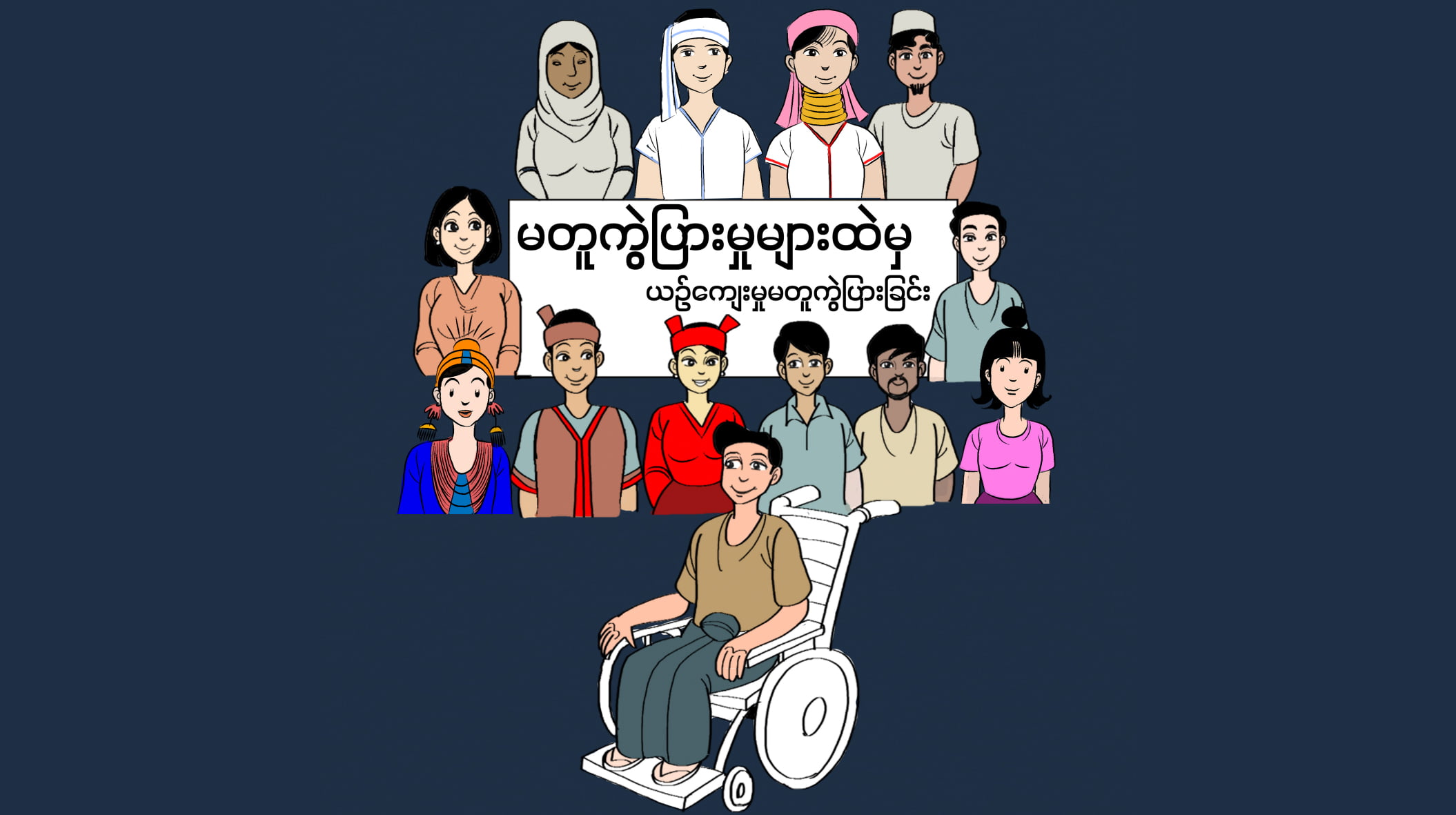
A social media campaign in Myanmar promoted inclusion and non-discrimination.
In 2024, UNDP provided legal counselling, assistance and representation to individuals and groups across 92 villages in 17 townships, supporting 2,753 people, with over 60 percent being women. Labour rights were promoted in 134 villages across 66 townships, benefiting over 100,000 individuals, almost three-quarters (73 percent) of whom were women. UNDP focused on promoting gender equality and non-discrimination through community engagement, conducting 204 awareness sessions on legal aid, HLP rights and labour rights, reaching 4,658 participants, 68 percent of whom were women. The "I am Me" social media campaign promoted social inclusion, non-discrimination and gender equality, reaching individuals through videos and posts in six local dialects. This multimedia campaign reached 3.9 million people across the country.
UNDP championed women's digital empowerment by increasing access to technology and strengthening digital literacy skills in rural and conflict-affected communities. Over 2,394 individuals, primarily women, benefited from these initiatives through in-person communication, including the establishment of pilot e-hubs in Kachin State.
CDR assistance was provided with training and technical support on mediation and other forms of dispute resolution offered to civil society organizations (CSOs) in 59 villages across 24 townships. Women mediators were empowered to participate in village-level conflict resolution processes, enhancing women’s representation in peacebuilding activities. This initiative benefited 1,233 people, fostering gender equality, community trust and inclusion.
Finally, UNDP contributed to high level advocacy on fundamental rights and gender equality through cooperation with other UN entities. UNDP’s support for local actors in Myanmar follows an approach grounded in sustainability and local ownership, aiming to help them become more resilient and effective, both technically and organizationally, while fostering network-building, dialogue and resource mobilization to reinforce the catalytic impact of these initiatives.
Looking forward
Amid ongoing conflict, economic instability and climate shocks, UNDP will continue prioritizing access to justice, digital empowerment and protection of HLP rights, especially for displaced women, vulnerable farmers and conflict-affected communities. UNDP will expand legal aid, strengthen community-based justice systems and promote gender equality and social inclusion by supporting women’s leadership in CDR and peacebuilding with a focus on minority groups. UNDP will continue to invest in local actors through tailored capacity building, ensuring sustainability and community ownership. Digital empowerment will be enhanced through digital literacy initiatives and information access in hard-to-reach areas. UNDP will also sustain high-level advocacy for inclusive governance, fundamental rights and equal access to services in partnership with UN agencies.