
Justice Futures CoLab
Countries & Territories
Overview
In 2024, global and national rule of law and justice systems continued to be under immense pressure due to multiple escalating conflicts, geopolitical shifts and a growing justice gap. The global justice gap remains one of the most urgent yet persistently under-addressed challenges of our time. As crises deepened across many parts of the world, UNDP expanded its work and remained steadfast in its commitment to support and implement innovative people-centred justice programming to close the justice gap, particularly in crisis, complex and fragile settings, in synergy with national and international partners. The development of the UNDP Policy Framework on People-Centred Justice and Security was finalized, marking UNDP’s continued institutional commitment to using a people-centred lens to provide innovative solutions and strengthen justice and security systems.
To measure rather than assume justice gaps, UNDP continued to invest in strengthening national capacities for justice data collection and analysis, ensuring that policies and decisions are evidence-based. UNDP’s innovative data collection initiatives in Lebanon, Malawi and Timor-Leste being some key examples.
People-centred justice
In 2024, UNDP strengthened its implementation of programming with a people-centred lens. The UNDP People-Centred Approach to Justice and Security represents a paradigm shift in how justice and security are conceived, delivered and experienced. As a lens, the approach redefines justice and security through people’s experiences, rights and needs, rather than focusing primarily on the needs of formal institutions. It adopts a broad understanding of justice and security and considers the wider contextual factors that influence people’s ability to access and experience justice and security. As a programming methodology, it promotes adaptive, participatory, integrated and evidence-based programming. It strategically combines both institutions and community-driven solutions to respond to people's priority needs, enhance their ability to claim their rights, and ensure justice and security systems deliver meaningful outcomes for people, not just institutional efficiency
UNDP addresses the persistent justice gap affecting billions of people globally by promoting context-specific innovative programming underpinned by five interconnected and mutually reinforcing elements, ensuring justice and security interventions are holistic, sustainable and grounded in human rights. The five elements are inclusion, participation, empowerment, local ownership and accountability.
In tandem with its people-centred justice programming, as part of the Justice Action Coalition (JAC) Secretariat, UNDP commenced provision of support to innovative country-level initiatives to advance people-centred justice. Anchored in the JAC vision to close the justice gap and leave no one behind, UNDP implemented the JAC Catalytic Fund on People-Centred Justice, prioritizing locally led and inclusive interventions to strengthen justice delivery for the most underserved populations. In 2024, UNDP's efforts focused on establishing the foundations for implementation and building momentum for people-centred initiatives in six countries: Colombia, the Dominican Republic, Kenya, Samoa, Sao Tome and Principe and Sierra Leone. In each context the interventions were designed to improve access to justice through formal and informal mechanisms, with a focus on civil, family, land and small claims disputes that disproportionately affect women, youth and other marginalized groups.
Looking forward
In 2025, UNDP will elaborate a guidance note for Country Offices on people-centred justice and security as a tool to support the programmatic application of the key elements of the policy framework. Together with sub-guidance notes on gender justice, customary and informal justice and access to justice in situations of forced displacement, these tools will build on best examples and lessons learned to continue to strengthen the people-centred programming offer of UNDP.
Customary and informal justice
Building on the achievements of the previous year, UNDP enhanced its work on customary and informal justice in collaboration with strategic partners within the Justice Action Coalition (JAC).
Working closely with UNDP Regional Hubs in Ethiopia and Senegal, UNDP co-organized a regional policy dialogue on strengthening diverse pathways to people-centred justice in West Africa and the Sahel. The event, held in collaboration with the International Development Law Organization (IDLO), UN Women and other strategic partners, served as a platform to launch the French language version of the JAC landmark report Diverse Pathways to People-Centred Justice.
Through partnership between the Global Focal Point for the Rule of Law and the Office of the Special Adviser on Africa, an informal dialogue on customary and informal justice was held with African academics and judges as part of the 2024 Academic Conference on Africa. This dialogue aimed to share lessons learned and best practices on providing support for CIJ systems at the country level.
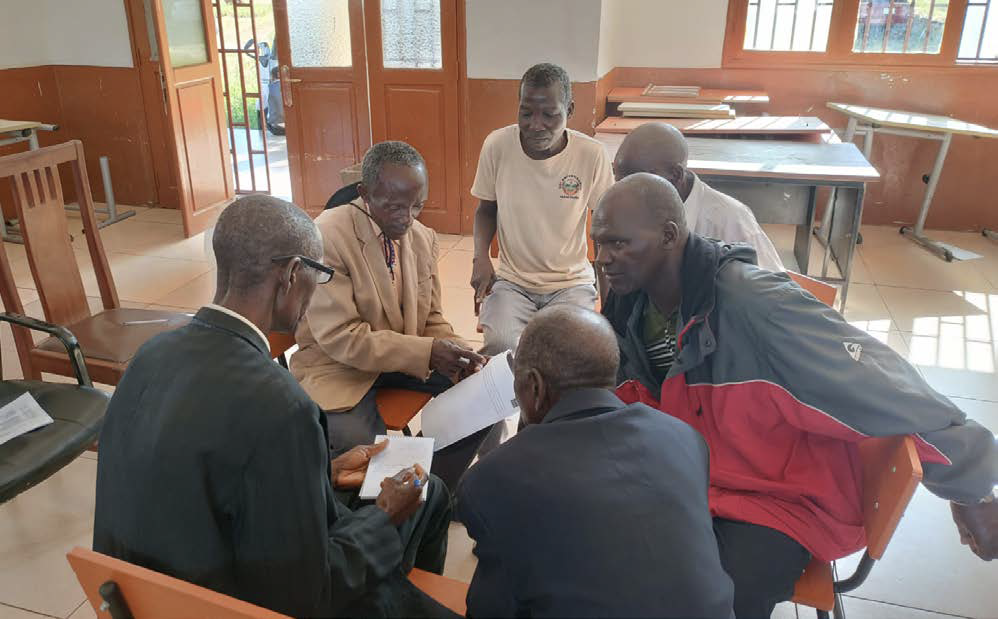
Community judges during a round table discussion on extrajudicial conflict resolution in Malema District, Nampula Province, Mozambique.
UNDP’s experience on the ground has proven that working with CIJ systems improves access to justice, especially in rural, marginalized or fragile settings.
In Myanmar, for example, Collaborative Dispute Resolution (CDR) assistance was provided on land and civil justice disputes, with training and technical support on mediation and other forms of dispute resolution, to civil organizations in 59 villages across 24 townships. This initiative benefited 1,233 people, fostering gender equality, community trust and inclusion. In Burundi, UNDP delivered training for 329 hill-level community leaders known as “notables collinaires”, including 100 women, on their new formalized role as mediators.
Linking customary mechanisms with formal justice systems while preserving local autonomy is a pragmatic approach that strengthens justice ecosystems. In Yemen, for example, UNDP and partners designed a policy framework for women’s access to informal and formal justice at the governorate level. The Standard Operating Procedures (SOPs) endorsed by key ministries emphasize community mediation and people-centred access to justice.
UNDP presented this work on CIJ and other achievements at the 68th session of the Commission on the Status of Women in New York, where it joined IDLO and the Governments of Germany and the Philippines at a panel discussion on women's empowerment and leadership in customary and informal justice systems.
Looking forward
In 2025, UNDP will develop a guidance note for Country Offices on people-centred customary and informal justice, as part of broader guidance on people-centred justice and security. This aligns with the recommendations from the 2022-2023 Independent Office Evaluation on UNDP’s access to justice work. UNDP will advocate for CIJ across various platforms with strategic partners, including the UN system, the Justice Action Coalition and at the World Justice Forum in June 2025. Collaborating with UNDP Regional Hubs, the community of practice on access to justice, rule of law and peacebuilding will strengthen efforts on CIJ, insider mediation and social cohesion, enhancing UNDP’s community-level initiatives.
Digital justice
The growing demand for e-justice solutions in various development contexts reflects an urgent need to close the justice gap and deliver more accessible, efficient and transparent services. Digital innovations, such as online case management, virtual hearings and mobile legal services, are becoming integral to modern, people-centred justice systems.
In addition to the infrastructure investments, realizing the full potential of digital justice requires efforts to strengthen digital literacy, ensure data security, promote inclusivity and ensure human rights protection in the use of digital technologies. In the provision of support on digital justice, UNDP is embedding this work within broader justice sector reforms, guided by principles of fairness, accessibility and human rights, especially since artificial intelligence (AI) is becoming an integral part of all digital innovations.
In 2024, UNDP implemented digital justice solutions in 38 contexts. See the highlights below.
In Kenya, the Small Claims Court mobile application was developed to make justice more accessible via mobile devices. Its various features enable users to file cases, track proceedings and access case information, significantly reducing physical and financial barriers to justice, particularly for vulnerable populations and small businesses. This tool represents a critical milestone in modernizing judicial services in Kenya and advancing the judiciary’s broader goal of enhancing efficiency and inclusivity.
In the State of Palestine, where movement restrictions limit physical access to courts, the Mizan court management system enabled remote judicial proceedings for over 160,00 users, including judges, prosecutors and litigants. Mizan's success was recognized internationally when it secured second place in the 2024 SDG Digital GameChangers Award under the “Peace” category.
In Bangladesh, a Digital Witness Deposition Mechanism was established in five courts in Cox’s Bazar, allowing for recording, reviewing and analysis of witness testimonies. This tool laid the groundwork for sustained improvements in judicial efficiency. Based on the request from the Ministry of Law, Justice and Parliamentary Affairs, UNDP and partners are exploring the nationwide rollout of the system.
In Burkina Faso, the system for electronic issuance of criminal records that UNDP piloted in four courts was successfully expanded to all 27 district courts by the Ministry of Justice.
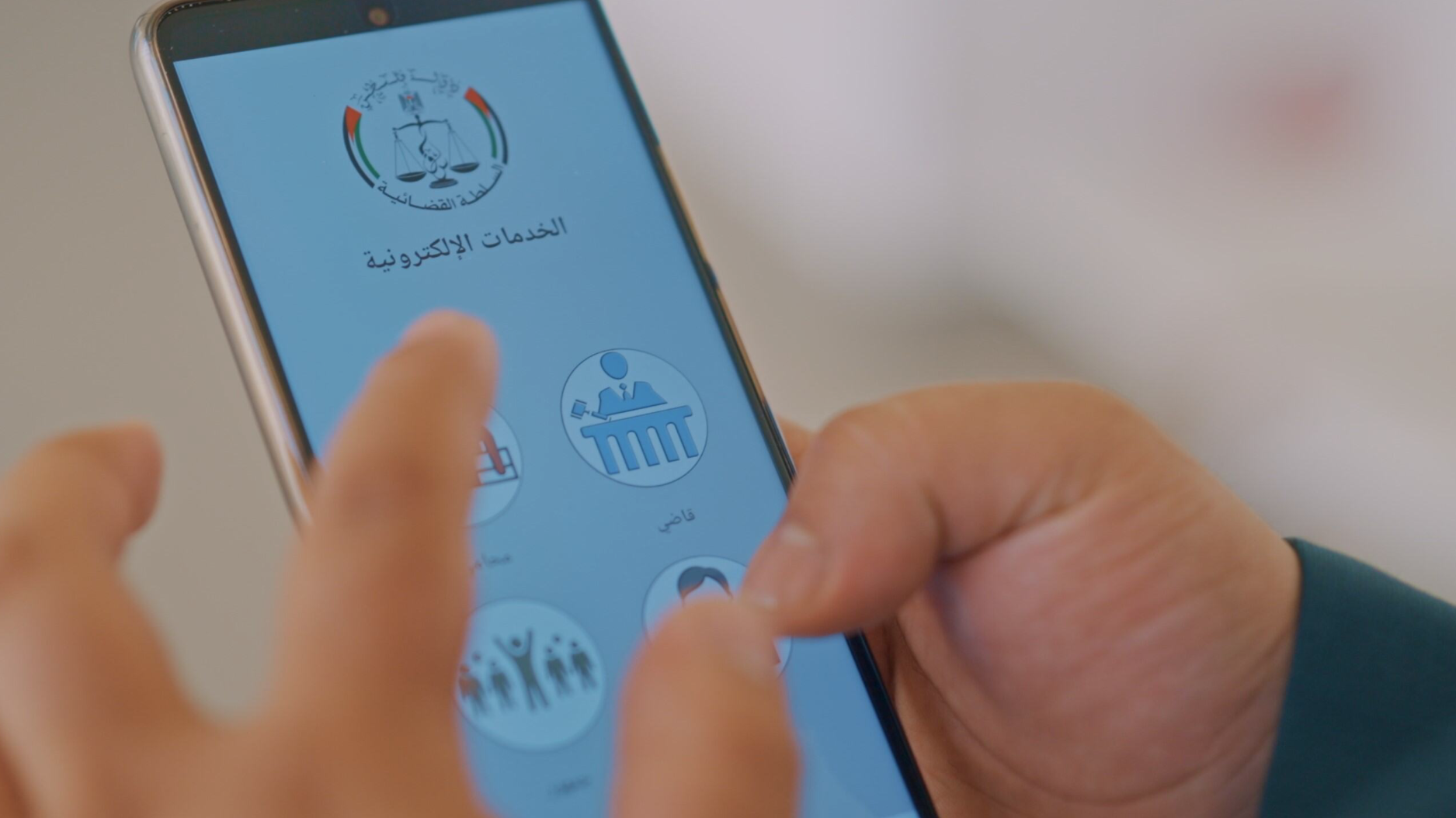
A user is accessing Mizan e-services to manage court procedures efficiently.
UNDP initiated a series of learning events to exchange insights and experiences on digital innovations. UNDP in Morocco, for example, hosted a global workshop to explore opportunities and challenges of e-justice solutions and strengthen regional cooperation. Organized under the Justice Futures Co-Lab, the workshop served as a lead-up to the International Conference on the Digital Transformation of Judicial Systems. Similarly, the regional conference held in Amman, Jordan, examined how digital technologies, including AI, can make justice and security more accessible, efficient and transparent. The discussions reiterated the need for digital justice initiatives that are inclusive, human rights-based and tailored to the diverse needs of communities. To showcase its digital innovations and to foster collaboration in this area, UNDP joined a Digital Justice Working Group co-chaired by Morocco and Spain.
Looking forward
UNDP will enhance its guidance on the application and deployment of AI in justice by developing tools and providing training for justice practitioners. This work will be carried out in collaboration with Regional Hubs, focusing on the digital readiness assessment tool for the rule of law, building on the efforts of the Rule of Law, Security and Human Right team at the Amman Regional Hub.
Environmental justice
In 2024, UNDP consolidated and expanded its work on environmental justice to protect environmental rights and promote the environmental rule of law. Judicial support programmes were strengthened through targeted training for new cohorts of judges, while engagement with networks of lawyers was broadened to enhance support across the justice sector. UNDP also extended technical and capacity-building assistance to national human rights institutions (NHRIs) and businesses to help protect and respect the right to a clean, healthy and sustainable environment.
As the concept of environmental justice remains relatively new to many actors in the justice and environmental sectors, UNDP has played a leading role in introducing and building momentum around it.
UNDP published national assessments on environmental justice in two countries, with three more expected in 2025. UNDP is also spearheading the development of the first global guidance on operationalizing the right to a healthy environment for businesses, NHRIs and justice professionals.
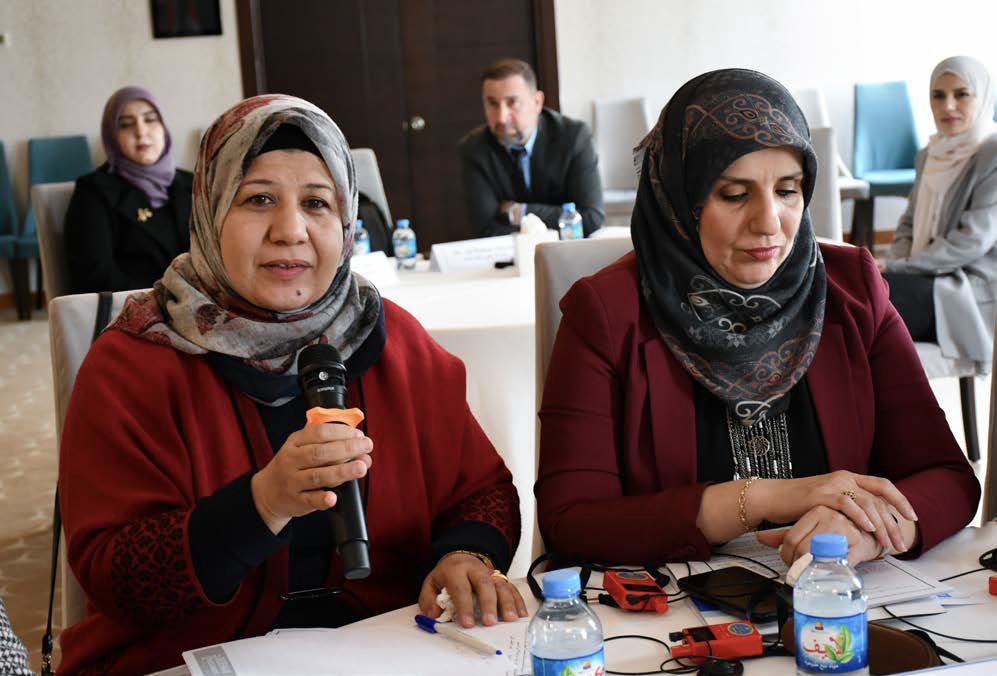
A round table in Erbil, Iraq to discuss the draft law on the environmental protection.
In Georgia, following the launch of the Access to Environmental Justice report, UNDP developed a specialized training module on environmental justice for the High School of Justice of Georgia. The first cohort of trainer-judges, comprising 34 participants, enhanced their expertise through UNDP-led sessions. These trainings were complemented by a nationwide awareness campaign on access to environmental justice, which reached 326,000 individuals. Additional training was provided to the Public Defender’s Office of Georgia to strengthen protections for the right to water and address issues related to water access, availability and quality in local communities.
UNDP also supported the Ombudsperson’s Office of North Macedonia in hosting the first international conference for NHRIs and Ombudspersons focused on advancing the right to a clean environment. The event brought together representatives from 12 countries and included consultations on developing a monitoring tool for NHRIs to assess the right to a healthy environment. Further support was provided to the Macedonian Young Lawyers Association through training and by facilitating connections between lawyers and environmental non-governmental organizations to foster joint action in communities affected by environmental injustices.
To improve the capacity of legal professionals, UNDP partnered with the UN Environment Programme (UNEP) to deliver the first environmental justice training for the Lao Bar Association. This initiative explored how the right to a healthy environment could be integrated into legal actions in Lao People’s Democratic Republic.
In Bolivia, UNDP built on two years of work to support the development of the Lithium Landscape System, a governance platform designed to facilitate multi-stakeholder and cross-border dialogue on lithium extraction. The platform has played a pivotal role in proposing regulatory frameworks, establishing community-led environmental monitoring and developing an AI-powered data monitoring system for extraction activities.
In 2024, UNDP launched the Practical Tool for Business on Human Rights Due Diligence and the Environment, the first resource to integrate environmental considerations into human rights due diligence under the UN Guiding Principles on Business and Human Rights. This tool was developed through consultations with 70 leading businesses and over 200 other stakeholders.
Looking forward
UNDP, in partnership with UNEP, will continue to support judicial training institutes by developing global resources for environmental education. The Human Rights Due Diligence and the Environment Practical Tool will be rolled out through training sessions offered via the Business and Human Rights Academy. Additionally, UNDP will expand its programming to further integrate rights and justice into climate action.
Gender justice
Despite global progress, women and girls continue to face systemic barriers to decision-making, particularly in fragile and crisis-affected contexts where gender-based violence remains alarmingly prevalent, impacting one in three women worldwide.
UNDP remains resolute in its commitment to advancing gender justice as a cornerstone of inclusive governance and sustainable peace.
In partnership with UN Women through the Gender Justice Platform, UNDP has bolstered institutional mechanisms to combat violence and discrimination against women while promoting the meaningful participation and leadership of women in justice and security institutions. These efforts reflect a strategic investment in equitable and resilient societies.
Noting the importance of strengthening women’s leadership in crisis contexts and in anticipation of commemorating the 25th anniversary of the UN Security Council Resolution 1325 on Women, Peace and Security, UNDP’s Global Programme for Strengthening the Rule of Law, Human Rights, Justice and Security for Sustainable Peace and Development co-hosted a global exchange for women leaders from Iraq, Ukraine, Yemen and the Autonomous Region of Bougainville to amplify their contributions to peacebuilding. This strategic event underscored the imperative of ensuring women’s full, equal and meaningful participation in decision-making and securing sustainable financial support for their peace efforts.
In 2024, the Gender Justice Working Group of the Global Focal Point for the Rule of Law (GFP) was launched, as recommended by the guidance note developed by the Gender Justice Platform and the GFP. The working group, co-led by UNDP, the UN Office of Rule of Law and Security Institutions (OROLSI) and UN Women, developed a gender marker system to track and enhance the gender-responsiveness of GFP missions. In 2024, the first GFP mission utilizing this framework was deployed in Burkina Faso, setting a precedent for mainstreaming gender-sensitive approaches within GFP interventions.
In Tanzania, UN Women led the support of the Mama Samia Legal Aid campaign in the Mtwara region, in collaboration with the Ministry of Constitution and Legal Affairs, enhancing access to justice for over 56,000 people (including 27,964 women and girls), who gained legal awareness on land and inheritance rights, as well as gender-based violence. The Platform also trained 30 paralegals and community workers to strengthen outreach and address discriminatory practices affecting women’s rights across 15 sub-districts in the country.
Through the Gender Justice Platform, UNDP continued supporting the advancement of women’s representation in the judiciary at national levels, in collaboration with the International Development Law Organization (IDLO), International Association of Women Judges (IAWJ) and national stakeholders
For example, in the Asia-Pacific region, the Platform advanced initiatives in Indonesia, Lao PDR and Thailand to address the underrepresentation of women in judicial leadership. A milestone event, Advancing Women’s Access to Justice in Asia and the Pacific: Balancing Parity and Empowerment, was convened as a side event of the Asia-Pacific Ministerial Conference on the Beijing+30 review.
In Montenegro, the Platform responded strategically to the backlash against women's rights by supporting gender-responsive and people-centred justice and security service delivery and promoting women’s meaningful participation and leadership in the justice and security sectors. This was achieved through collaboration with the Women’s Leadership Network, a key alliance that brings together women leaders from government, the judiciary, civil society, academia and the private sector. In partnership with the Supreme State Prosecutor's Office, UNDP enhanced institutional capacity to respond effectively to gender-based violence by embedding gender equality principles throughout prosecutorial and judicial processes, thereby reinforcing accountability and systemic resilience.
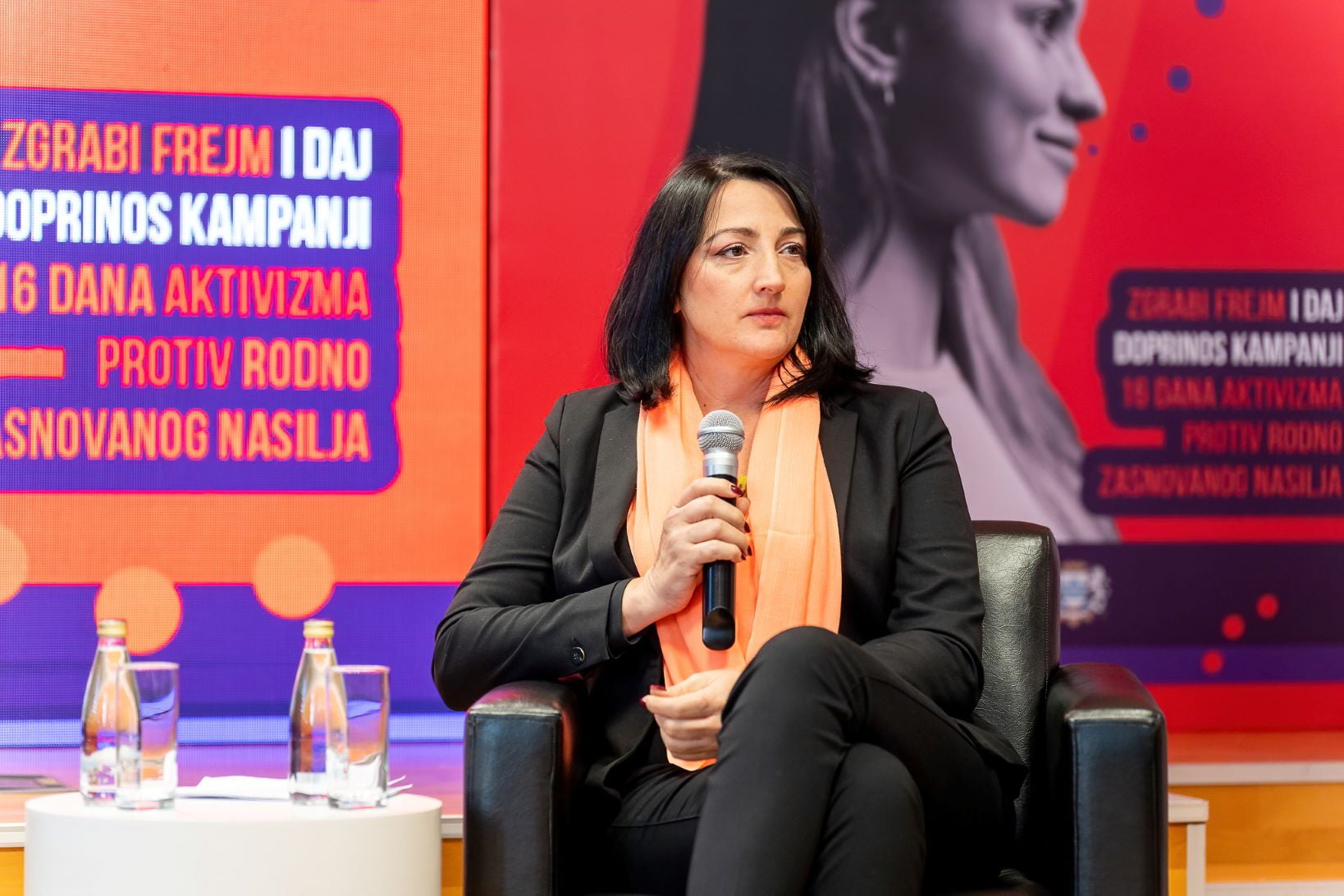
The lunch of the “16 Days of Activism” campaign in Montenegro.
At the policy level, UNDP in partnership with UN Women, IDLO, the World Bank and the Pathfinders for Peaceful, Just and Inclusive Societies, launched a strategic research initiative on Financing Women’s Justice Needs: Global Perspectives on Violence Against Women, and a Case Study on Uganda. Presented during the 68th Commission on the Status of Women (CSW), this research underscores the urgency of increasing public financing for justice systems responsive to women’s justice needs, particularly in addressing violence against women. The research analysis brings sharp focus, especially on violence against women, aiming to understand the existing funding gaps that must be addressed to achieve access to justice for women and girls globally and to fulfill the commitment of the 2030 Agenda.
Looking forward
As the Gender Justice Platform nears the conclusion of its current phase in 2025, UNDP, in partnership with UN Women, will intensify efforts to build on the results of the past three-year period to elevate support on gender justice in response to the current global over-lapping crises that have a disproportionate impact on women. This entails strengthening policy and programming support while working closely with global, regional and national partners to embed gender justice across all programming.
The Platform will continue to scale its work on women’s leadership in the justice sector, responding to growing global demand for equitable legal systems that are responsive to women’s needs. In 2025, new interventions will be launched in Tajikistan and Lao PDR. On the learning side, UNDP will launch a Justice Futures CoLab on Women’s Leadership in the Justice Sector and start developing new guidance on the people-centred approach to gender justice. These learning-focused initiatives will serve as a strategic forum to shape the Platform’s positioning and partnerships ahead of key global milestones, including the 2026 High-Level Political Forum and the 2026 Commission on the Status of Women (CSW).
Transitional justice
Transitional justice operates at the intersection of human rights, development, peace and security. It addresses the legacy of mass human rights violations and fosters resilient communities. In post-conflict, crisis or fragile contexts, truth-seeking and reconciliation initiatives are critical to the restoration and renewal of the social contract, peacebuilding, prevention of recurrence and ultimately the long-term peace and stability.
UNDP plays a pivotal role in supporting transitional justice through a comprehensive development approach that tackles the root causes of systemic inequalities, addressing impunity and bringing accountability. By working closely with national justice and security institutions, UNDP promotes national ownership and local solutions, while providing extensive capacity-building across all phases of the transitional justice process.
In Colombia, UNDP provided financial and technical support for an innovative transitional justice initiative, the initiation of the rollout of the Agrarian Jurisdiction (JAR), a key recommendation of the Peace Agreement. The JAR is essential for resolving land-related disputes and ensuring access to justice for vulnerable rural populations, including women, internally displaced persons (IDPs) and youth. It is a cornerstone of peacebuilding, guaranteeing justice for the most marginalized.
In South Sudan, UNDP is enhancing access to justice for vulnerable groups, particularly women and girls affected by gender-based violence and conflict-related sexual violence. Support includes equipping the Gender-Based Violence Court with case management systems, training court personnel and assisting victim support groups and psychosocial workers. UNDP is also providing technical assistance to operationalize the Commission on Truth, Reconciliation and Healing (CTRH) and the Compensation and Reparations Authority (CRA).
In Liberia, UNDP has initiated support to strengthen national capacities for designing and implementing rule of law and transitional justice interventions. This includes laying the groundwork for systemic change through the establishment of a War and Economic Crimes Court, capacity-building for legal practitioners, and the development of gender-sensitive justice frameworks.
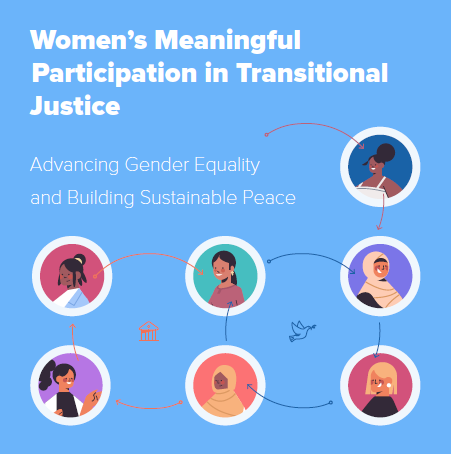
Through the Gender Justice Platform, continued support was provided to survivors of conflict-related sexual violence in Mali, South Sudan, Tunisia, Ukraine, as well as in Kosovo. These efforts contributed to the implementation of the recommendation of the joint policy report Women’s Meaningful Participation in Transitional Justice: Advancing Gender Equality and Building Sustainable Peace.
Strategic partnerships
UNDP advanced regional transitional justice by supporting the implementation of the African Union Transitional Justice Policy, in collaboration with the Transitional Justice Legacy Fund, the International Center for Transitional Justice (ICTJ) and the Centre for the Study of Violence and Reconciliation (CSVR), among others. This regional framework guides the African Union (AU) member states emerging from conflict or repression in developing context-specific, comprehensive strategies for sustainable peace, justice, reconciliation, social cohesion and national healing.
In 2024, UNDP participated in the Annual Roundtable on Transitional Justice, hosted by the ICTJ and the Ministry of Foreign Affairs of the Netherlands. The roundtable provided a key platform for dialogue, collaboration and alliance-building among governments, multilateral institutions and private sector actors engaged in transitional justice worldwide.
At the global level, UNDP is participating in the newly established Inter-Agency Transitional Justice Task Force, part of the Guidance Note of the Secretary-General: Transitional Justice as a Strategic Tool for People, Prevention and Peace. Led by the UN Human Rights Office and the and the UN Department of Political and Peacebuilding Affairs, the Task Force aims to enhance coordination and promote strategic, people-centred transitional justice efforts. UNDP brings comparative advantage and global programming footprint while also ensuring close coordination with already existing rule of law mechanisms.
At the policy level, UNDP contributed to groundbreaking research by the Knowledge Platform Security and Rule of Law on the Integration of Mental Health and Psychosocial Support Approaches in Accountability Mechanisms for Atrocity Crimes, led by the Knowledge Management Fund of the Knowledge Platform for Security and Rule of Law and funded by the Government of the Netherlands. The study identifies best practices for embedding victim-centred psychosocial support into accountability mechanisms and will inform the development of more inclusive transitional justice strategies.
Looking forward
In 2025, UNDP will continue to promote women’s and youth participation in transitional justice through its engagement with the African Union Transitional Justice Policy. Additionally, it will launch a dedicated platform for knowledge-sharing and dialogue on emerging trends in transitional justice worldwide.
-
The smallest administrative unit in Burundi's local governance framework.
-
References to Kosovo shall be understood to be in the context of Security Council resolution 1244 (1999).