
Community security
Countries & Territories
Overview
In 2024, the global peace and security landscape became increasingly strained, with escalating conflicts, intensifying geopolitical tensions and emerging transnational threats further aggravating pre-existing vulnerabilities. This instability disrupted fragile regions and hindered progress toward sustainable development. The Global Peace Index (2024) estimated the economic impact of violence at US$19.1 trillion – 13.5 percent of global GDP – with 74 percent attributed to military spending. Conflict escalated, particularly in the Sahel, the Middle East and parts of Latin America, while weak governance and institutional fragility continued fueling corruption, organized crime and violence. Over two-thirds of the 120 countries under survey scored below 50/100 on the Transparency International Corruption Perceptions Index, highlighting widespread corruption and insecurity. Cybercrime costs the global economy over $10 trillion annually.
In response, UNDP intensified its support for sustainable peace by advancing inclusive, community-driven security approaches. Strategic priorities focused on reinforcing governance and justice institutions, fostering the leadership of women and youth in peacebuilding processes and tackling the underlying drivers of insecurity, including systemic inequality and institutional fragility. These initiatives were designed not only to address immediate risks, but to lay the foundations for enduring resilience in regions confronting intersecting and protracted crises.
People-centred security: global policy development and partnerships
UNDP continues to demonstrate its leadership in addressing complex global challenges, fostering innovative partnerships and driving transformative changes in peace and security.
Building on its work on people-centred security, particularly in contexts influenced and shaped by non-state and hybrid security actors, UNDP developed innovative policy approaches to navigating these complex environments along with recommendations for donors and international actors operating in such contexts. In addition to finalizing the research on hybrid security governance, UNDP, in collaboration with the Folke Bernadotte Academy (FBA), facilitated knowledge exchange under the Advisory Group on People-Centred Security and at the Stockholm International Peace Research Institute (SIPRI) Stockholm Forum on Peace and Development.
Through its strategic partnership with the Department of Peace Operations (DPO) and the World Bank Group (WBG), UNDP has further solidified its commitment to the security-development nexus. New methods were explored to strengthen collaboration between the UN and the WBG in the security and justice sectors, with a focus on fostering sustainable development.
The findings of a pivotal report with actionable recommendations to enhance this partnership were discussed at such high-profile forums as the World Bank Fragility Forum 2024 and the SIPRI Stockholm Forum.
As a co-chair of the Interagency Security Sector Reform Task Force (IASSRTF), UNDP led the development of a groundbreaking knowledge product on Security Sector Reform (SSR) and Climate Change, integrating country-level and global policy insights. UNDP’s work in Somalia was used as a case study to highlight the growing challenges to peace and security in regions where resources are increasingly constrained due to environmental pressures. Building on this work, UNDP in Somalia supported the organization of a high-level conference on security and climate change.
To further discussions around the role of security institutions in adapting to challenges posed by climate change, UNDP contributed the conceptualization of a session at the UN Climate Change Conference in Baku (COP29) titled Serving in the Storm: Strengthening National Security Institutions to Provide Accountable and Effective Security for the State and its Peoples, During the Climate Crisis.
Looking forward
UNDP’s newly established Governance, Rule of Law and Peacebuilding (GRP) Hub fosters deeper integration across governance, rule of law and peacebuilding portfolios, creating a stronger platform to synergize community security initiatives with interventions under peacebuilding, conflict prevention and local governance. Early progress has already been achieved with regards to UNDP engagement with non-state and hybrid actors delivering essential services, including in the security sector.
Moving forward, UNDP will continue advancing people-centred security by adopting innovative tools such as standardized perception surveys and tailored indicators to guide programming, particularly in fragile and conflict-affected contexts. The agenda will prioritize emerging security challenges, including the digitalization of the security sector and risks linked to artificial intelligence (AI), and technology-facilitated gender-based violence. Strategic partnerships will be expanded and new collaborations cultivated to amplify impact. This forward-looking approach will ensure that UNDP’s security programming remains adaptive, inclusive and responsive to the world’s evolving challenges.
Support to the policing services and the security sector reform/governance (SSR/G)
In 2024, UNDP’s support to the security sector contributed to enhanced institutional strengthening and accountability and also promoted gender-inclusive and environmentally responsive security frameworks. By aligning community needs with state capabilities, UNDP fostered durable social cohesion and resilience in crisis-affected and fragile contexts.
Policing initiatives focused on strengthening institutional capacity and promoting human rights-based approaches. In Haiti, where the security situation remains alarming, police operational capabilities were bolstered through the provision of 4,000 units of personal protective equipment, specialized training for over 60 officers, and the rehabilitation of the Thomassin 25 police station. To support retention, 786 cadets, including 119 women, received first assignment allowances.
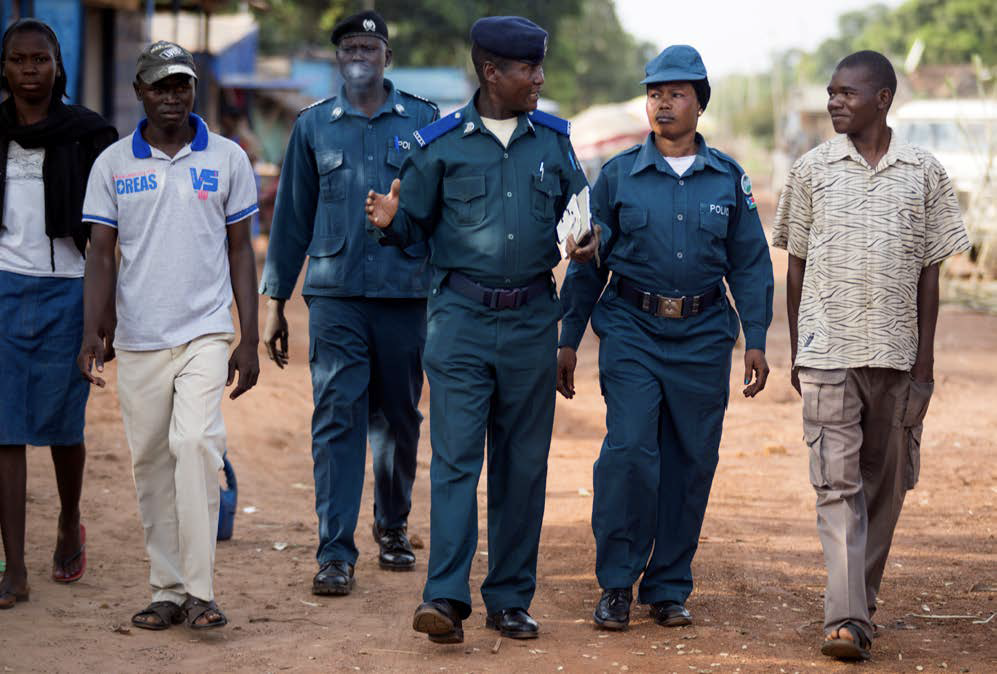
Community policing in Wau, South Sudan.
In Kosovo, to curb the proliferation of small arms and light weapons (SALW), UNDP developed training curricula for police cadets and community officers, a train-the-trainer programme on illicit arms trafficking, and specialized training for 516 officers on preventing firearm misuse in domestic violence cases. In Bosnia and Herzegovina, over 200 police and customs officials participated in cross-border SALW exercises, while a new investigations guide improved prosecutorial collaboration. Law enforcement agencies destroyed 4,200 illicit weapons collected from 14 police agencies.
Human rights-based policing was prioritized in Sri Lanka, where UNDP partnered with the Human Rights Commission to draft guidelines on police conduct during public protests and trained officers amid civil unrest. In Ukraine, forensic capabilities were enhanced through rapid DNA technology and law enforcement received training in victim-centred investigative techniques, supported by psychologists for survivors of conflict-related sexual violence.
Community trust-building was another key focus of UNDP programming. In the Central African Republic, 36 officers of the Internal Security Forces were trained in community policing. In Bangladesh, community policing forums in Cox’s Bazar developed five community safety plans and trained 40 mediators and 100 youth in conflict resolution. Fiji shifted its policing culture from a “warrior” to a “guardian” mindset by integrating traditional leaders, women and youth into community strategies. In Côte d’Ivoire, civil-military committees received equipment to improve early warning systems and dialogue.
UNDP’s security sector reform (SSR) programmes emphasized inclusive policy frameworks, gender equity and climate-security linkages. The Central African Republic, for example, advanced legal reforms with two draft laws on security sector governance. Somalia integrated community threat assessments from 22 locations into state security strategies, while staff in Southwest State began data-driven planning. In Iraq, an inter-agency protocol was established between the Ministries of Environment and Interior and the Supreme Judicial Council, training inspectors and police on environmental case investigations.
UNDP also integrated policing and SSR into broader conflict prevention strategies. In Colombia, technical assistance supported land conflict resolution and environmental planning. Moldova piloted a Social Tensions Monitoring Mechanism in 12 districts, engaging local stakeholders and refugees. In Burundi, 329 community mediators and 200 police officers were trained in investigating sexual and gender-based violence. Timor-Leste advanced alternative dispute resolution by training community leaders and supporting operational guidelines for the Land and Property Commission.
Looking forward
UNDP will continue to prioritize community-based initiatives, increase women’s participation in security forces, implement oversight mechanisms, adopt new technologies and strengthen international partnerships to ensure effective, accountable and inclusive security sector reforms that contribute to sustainable peace and development.
Addressing technology-facilitated gender-based violence in partnership with the Korean National Police Agency
In 2024, UNDP, in partnership with the Korean National Police Agency (KNPA), made significant strides in addressing technology-facilitated gender-based violence (TF-GBV) through a multi-country initiative. Implemented in collaboration with the Global Programme for Strengthening the Rule of Law, Human Rights, Justice and Security for Sustainable Peace and Development, the Global Programme on Gender and UNDP Seoul Policy Centre, the project focused on enhancing law enforcement capacities, deploying innovative technologies and fostering survivor-centred approaches across six partner countries.
Key interventions included specialized training for police forces, the provision of investigative tools and the localization of artificial intelligence-based systems to ensure contextual relevance. Public awareness campaigns targeted youth and women, equipping them with knowledge and resources to recognize and report TF-GBV. Institutional reforms, such as the creation of dedicated police units and national agencies, reinforced legal frameworks and victim support systems. These efforts were grounded in a whole-of-society approach, emphasizing collaboration between law enforcement, civil society and technology stakeholders.
Two major policy initiatives emerged from the project. The Global Policy Dialogue on TF-GBV, held in Seoul, convened over a hundred stakeholders from governments, civil society and international organizations to share experiences and explore collaborative solutions. The event underscored the importance of cross-border cooperation and the need for unified strategies to address the evolving nature of TF-GBV.
A comprehensive policy paper was drafted, emphasizing the critical role of law enforcement in addressing TF-GBV through systemic reforms, inter-agency cooperation and engagement with civil society and technology companies. It advocated for equipping police with the tools, training and institutional support necessary to respond effectively to digital threats.
Country-level achievements reflect the project’s adaptability and impact. In Bosnia and Herzegovina, UNDP supported the establishment of a specialized police unit and launched a national awareness campaign focused on internet safety and referral systems. Côte d’Ivoire enhanced police training and created a national cybersecurity agency, while also reaching hundreds of students through public education efforts. Indonesia integrated TF-GBV training into the national police curriculum, ensuring long-term capacity-building and institutional sustainability. In Maldives, collaboration with a local civil society organization (CSO) led to the development of a TF-GBV lexicon and improved data systems tailored to the country’s linguistic context. North Macedonia launched an e-learning course for police officers and contributed to drafting a new Criminal Code and national strategy to address gender-based violence, reinforcing legal protections and institutional accountability.

Looking forward
The second phase of the initiative, supported by KNPA and launched in November 2024, will run through 2027. This phase aims to deepen survivor-centred law enforcement practices, enhance cross-sector collaboration for better data and understanding of TF-GBV, and strengthen policy and legal frameworks. With a renewed focus on sustainability and scalability, the project will build on the successes of the first phase, expanding its reach and promoting cross-regional knowledge sharing. By continuing to invest in institutional capacity, community engagement and innovative tools, the initiative seeks to create safer digital and physical environments for women and girls worldwide.
SALIENT: Saving Lives Entity
Under their SALIENT joint initiative, the Office for Disarmament Affairs (UNODA) and UNDP work on the principle that small-arms control and armed violence reduction must be nationally led, people-centred and both anticipatory and responsive. In 2024, six countries benefitted from SALIENT’s comprehensive, sustainable and development-oriented approach: Ghana, Honduras, Jamaica, Kyrgyz Republic, Panama and Papua New Guinea.
The activities involved legislative and policy support, including on data collection and gender mainstreaming, capacity-building for law enforcement, as well as awareness raising that tackled the roots of gun violence. SALIENT partners worked in coordination with civil society, governments and school systems.
Recognizing that weapon proliferation fuels sexual violence in conflict and violence against women, with small arms and light weapons used in approximately 70 to 90 percent of incidents of conflict-related sexual violence, SALIENT dedicates 31.75 percent of its budget to gender equality and women's empowerment. From 2020 to 2024, SALIENT contributed approximately $1.6 million to gender-focused initiatives.
To showcase the achievements of SALIENT and capitalize on the momentum from the 4th Review Conference on the UN Programme of Action on small arms and light weapons, UNODA and UNDP convened a high-level event, reiterating the need to scale-up the small arms control efforts through SALIENT and sustain its impact. Notably, the outcome document of the Review Conference referenced SALIENT as a means of accessing international assistance to ensure the full and effective implementation of the Programme of Action to Prevent, Combat and Eradicate the Illicit Trade in Small Arms and Light Weapons in All Its Aspects.

In Honduras, over 1,000 teenagers over 1,400 children were engaged in sports tournaments. Also, a campaign was launched to exchange toy guns for books and backpacks
These country examples demonstrate SALIENT’s transformative potential for arms control, armed violence prevention, peace and development.
In Ghana, the Arms Bill came into force, to align small arms-related protocols with international standards. SALIENT enhanced the advocacy capacities of civil society and the capacities of security institutions to prevent the illicit trafficking of small arms, in coordination with the Ghanian National Commission on Small Arms and Light Weapons and the UN Office of Drugs and Crime.
In Honduras, SALIENT focused on prevention strategies that tackle the cultural and patriarchal drivers of violence among youth, working with schools, educators and youth to develop conflict resolution and inter-personal skills. Active in four municipalities, the project is implemented by UNDP and the UN Regional Centre for Peace, Disarmament and Development in Latin America and the Caribbean, alongside the Ministry of Security and civil society.
In Kyrgyzstan, UNDP and the UN Regional Centre for Peace and Disarmament in Asia and the Pacific worked with the Prosecutor General's Office to develop a digitized Weapons Registry system for tracking civilian firearms.
In Panama, a field visit and actor mapping laid the grounds for preparing a national inclusive dialogue to address the presence of weapons in schools in Barrio Norte in Colón city.
In Papua New Guinea, UNDP, UN Population Fund (UNFPA) and the UN Regional Centre for Peace and Disarmament in Asia and the Pacific conducted a Small Arms Survey, collecting data for the first time since 2005. The survey results informed the draft National Action Plan on Small Arms and Light Weapons. The project's initial scope was expanded due to growing needs and a specific request from national partners.
In Jamaica, SALIENT prevented gun violence in schools by building on activities carried out in 2023.
Watch this video to hear the voices from Jamaica and get SALIENT global insights
Looking forward
In 2025, SALIENT will complete implementation in Ghana, Honduras, Kyrgyzstan, Panama and Papua New Guinea, as well as in Jamaica with top-up funding. The next phase of the project, SALIENT 2.0 will be designed to scale-up efforts and sharpen joint approaches based on the lessons learned. One of the 2025 priorities for UNDP and UNODA will be the resource mobilization for SALIENT 2.0 to ensure its continuation and sustainability.
SEESAC: small arms control for a safer South East and East Europe
The proliferation and misuse of small arms and light weapons (SALW) continue to pose a significant threat to public safety, the rule of law and regional stability in South-East and East Europe. As a long-standing regional initiative established by UNDP and the Regional Cooperation Council, South Eastern and Eastern Europe Clearinghouse for the Control of Small Arms and Light Weapons (SEESAC), supports authorities in the region in addressing these challenges.
In 2024, SEESAC continued strengthening the capacities of authorities to build inclusive and accountable security sector institutions through tailored support, strategic interventions and regional cooperation, combined with hands-on assistance.
The Western Balkans SALW Control Roadmap (Roadmap) remained a transformative regional framework, advancing alignment with the European Union (EU) and international security standards. SEESAC facilitated coordination, monitored progress and fostered cooperation to achieve the Roadmap’s goals with the support of the EU, Germany and France. The Roadmap for 2025–2030, developed with SEESAC’s facilitation, was endorsed by the Ministers of Interior at the EU–Western Balkans Ministerial Forum, reaffirming the region’s strategic commitment to reducing the threat posed by illicit firearms. The Roadmap was recognized at both the Berlin Process Summit and EU–Western Balkans Summit for its impact, regional ownership and contribution to enhancing regional cooperation and stability. As the Secretariat of the Western Balkans SALW Control Roadmap Multi-Partner Trust Fund, SEESAC coordinated and monitored activities while supporting the Steering Committee’s decision-making. In 2024, the Trust Fund received new contributions totalling $1 million, increasing its value to $29 million.
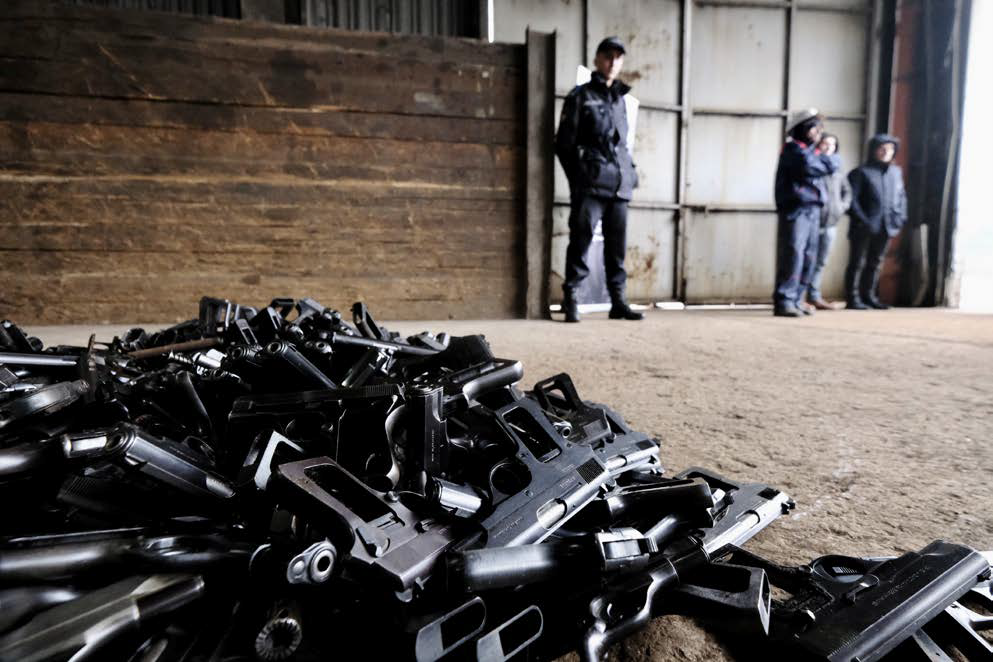
Law enforcement authorities in Bosnia and Herzegovina destroyed 1,958 weapons and 1,981 weapon parts.
Regional cooperation was strengthened at the policy and operational levels by facilitating biannual gatherings of Small Arms and Light Weapons (SALW) commissions and the South-East Europe Firearms Experts Network (SEEFEN) that convene representatives from the Western Balkans, the Republic of Moldova and Ukraine.
Legislative and policy harmonization with the EU Acquis was supported across the region, including support in drafting new laws and SALW control strategies, conducting gap analyses and organizing a regional workshop.
By delivering €5.5 million in equipment (see a showcase of equipment delivery in Montenegro), conducting assessments, developing 24 Standard Operating Procedures (SOPs), and organizing specialized training and annual meetings, SEESAC enhanced the capacities of law enforcement across the region in combating firearms trafficking and conducting firearm-related investigations.
Support for the operationalization of Firearms Focal Points continued through expert advice, technical support, specialized training programs, workshops and annual meetings, boosting the police capacities to conduct effective firearms-related investigations and to combat illicit firearms misuse and trafficking. Similarly, the capacities of crime scene investigation units within police across the Western Balkans were improved to align their practices with EU best practices.
Efforts to advance physical security and stockpile management of SALW and ammunition included the destruction of 2,271 weapons (see a showcase of weapon destruction in Bosnia and Herzegovina), and the upgrade of one storage location and 12 evidence rooms across South-East Europe.
To promote the integration of gender perspective into arms control policies and practices, SEESAC published two sets of guidelines to help authorities better assess risks and prevent firearm misuse in domestic violence cases, accompanied by relevant trainings.
Awareness-raising activities were supported through a regional task force, awareness-raising campaigns, training and targeted knowledge products.
In 2024, SEESAC continued providing insights into SALW-related trends, causes and impacts through various knowledge products.
Interregional cooperation was improved through two separate study visits by delegations from the Kyrgyz Republic and the Kingdom of Cambodia to the Western Balkans, providing opportunities for knowledge sharing on SALW control, focusing on best practices in strategy development, regulatory frameworks and operational measures.
Ministries of Defence and Armed Forces in the Western Balkans were further supported in advancing gender equality in line with the Women, Peace and Security Agenda. Key activities included the 9th Regional Meeting of the Network of Gender Military Trainers, the launch of an online gender equality course and a workshop on gender-responsible leadership. The eighth cycle of the Gender Coach Programme was completed with the Chief of Staff of Montenegro’s Armed Forces, strengthening leadership commitment to gender equality in defence.
Looking forward
Building on the successful completion of the Roadmap’s first phase, SEESAC has been entrusted to continue coordinating and monitoring the implementation of the Roadmap 2025–2030, leading a new phase of comprehensive arms control activities, reinforcing regional cooperation and advancing sustainable progress.
-
References to Kosovo shall be understood to be in the context of Security Council resolution 1244 (1999).