
Burundi
Countries & Territories


Key results
- Over 550 detainees were released and nearly 600 detainees received legal and psychosocial assistance as a result of interventions by Burundi’s national human rights institution (CNIDH), inspections by the Public Prosecutor’s Office and civil society, supported by UNDP. These interventions improved human rights for detainees and strengthened human rights infrastructure for the most vulnerable.
- UNDP expanded access to civil justice and legal recourse for people living in Burundi. Through targeted legal aid and institutional engagement, over 7,500 individuals received access to justice in relation to land disputes in rural areas, mediation between the public administration and population, or for socioeconomic reintegration for sexual and gender-based violence survivors.
- Institutional capacity-building was central to driving long-term change and promoting people-centred justice and security. This includes training for 200 local mediators, 200 police officers, 74 judges, and 85 court and correctional officers. These efforts streamlined human rights-based approach, ethics, support to sexual and gender-based violence survivors, and laid the foundation for digital trials.
Burundi remains low on the Human Development Index, ranking 187 out of 193 countries, and 43rd out of 53 countries on the Mo Ibrahim African Governance Index. In 2024, Burundi faced additional challenges, such as a fuel shortage and severe flooding which forced many people out of their homes and led to a 25 percent increase in the number of internally displaced persons (IDPs). These challenges were exacerbated by foreign exchange deficits, limiting the country’s ability to import essential goods and reinforcing economic hardship for the population.
In 2024, to contribute to transformative governance reforms and improve people’s access to human rights and justice, UNDP launched two governance portfolios with UNDP’s new portfolio approach, convening a wide range of national partners to maximize adaptability and impact. In particular, UNDP brings together the Prime Minister’s Office, Court of Accounts and General Inspection of the State, the Ministry of Justice, the judiciary and security sector, as well as the National Human Rights Institution (NHRI) and the Ombudsperson. The portfolios were designed with the support of UNDP’s Global Programme for Strengthening the Rule of Law, Human Rights, Justice and Security for Sustainable Peace and Development (the Global Programme) to ensure access to justice for those most left behind, including pre-trial detainees, survivors of sexual and gender-based violence, and people in rural areas facing civil justice issues such as land disputes.
The rule of law and access to justice portfolio reflects a renewed political will to build public trust in the rule of law, justice and security, and facilitates joint efforts towards a people-centred justice sector, including criminal and civil justice chains as well as the penitentiary system. Under this approach, UNDP pilots justice sector reforms to enhance social cohesion, community security, prevention and response to sexual and gender-based violence, along with digitalization of the justice chain and joint learning and co-creation by all actors. These efforts link to the governance portfolio on effective institutions to promote transparency, accountability and the fight against corruption. UNDP also supports land titling so that land ownership is formalized to reduce disputes and enhance women’s access to land.
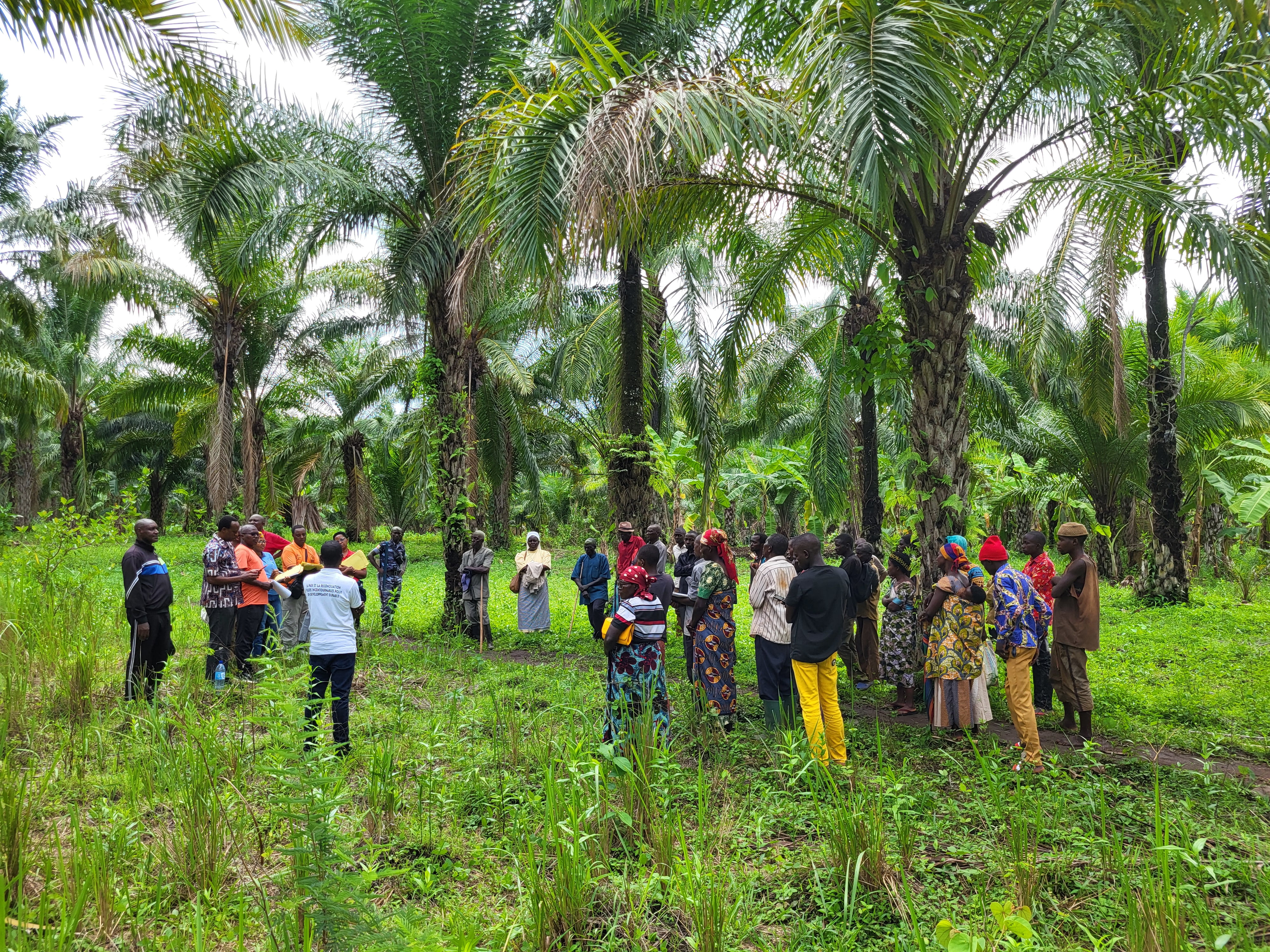
In Nyanza-Lac (Southern Burundi), the Special Court for Land and Other Property is enforcing a ruling on a land dispute during a mobile court session.
The portfolio also includes delivery of the UN Joint Human Rights Programme to strengthen the human rights infrastructure in Burundi with the UN Human Rights Office (OHCHR), UN Women, UNICEF and UNESCO, co-funded by the Netherlands and Switzerland. Building on the portfolio’s work on rule of law and its convening capacity, including the Global Programme’s catalytic funding, a new Peacebuilding Fund (PBF) project for 2025-2027 was designed to promote dialogue between ethnic groups and different generations, and contribute to healing of trauma resulting from past violence and crises. Similarly, another PBF programme will soon be finalized on youth, peace and security, given that more than 40 percent of Burundians are under 15, and to promote young people as actors for peace and justice and the implementation of the African Union strategy on Youth, Peace and Security.
UNDP promoted access to civil justice for 7,503 individuals through various channels. A total of 2,637 beneficiaries, including 1,300 women, obtained rulings issued by the Supreme Court. Additionally, 4,344 beneficiaries received rulings from the Special Court for Land and Other Property through mobile court hearings, with 2,320 women among them. The Ombudsperson’s office facilitated the resolution of 450 dispute cases between individuals and public administration, meaning 1,356 people, including 533 women, obtained a satisfactory resolution to their disputes without resorting to courts. These efforts ensured greater access to legal recourse, enhanced the protection of rights, and promoted social cohesion. In partnership with two national non-governmental organizations (NGOs), UNDP supported 280 sexual and gender-based violence survivors by providing psychosocial services and socioeconomic reintegration in their communities.
On the promotion and protection of human rights, especially for detainees, the NHRI (the CNIDH) and the Public Prosecutor’s Office visited places of detention, while civil society reported on the human rights situation, leading to immediate progress in individual cases, as well as to improved detention conditions in view of a corrections policy. Given the important role of the NHRI supported in 2024, its A-status was renewed in 2025.
In 2024, the NHRI visited 224 detention cells of the judicial police and ten prisons, leading to the release of 757 persons (including 104 women and 11 girls).
In parallel, the Public Prosecutor’s Office carried out three prison inspections to review detainees' files and evaluate the progress in their cases. Finally, UNDP supported a national NGO to identify legal and other needs in five prisons, to provide direct assistance and inform policy development. As a result, 250 detainees benefitted from legal assistance, while 330 individuals received psychosocial support. In 30 cases where unlawful detention was identified, the accused were either released or their sentences were adjusted. Additionally, 80 prison officers were trained on detainee rights and detention practices.
To strengthen the capacities of rule of law institutions, UNDP delivered training for 329 hill-level2 community leaders known as “notables collinaires” in Burundi, including 100 women, on their new formalized role as mediators. Furthermore, 200 national police officers, including judicial police as well as community police, were capacitated on investigating sexual and gender-based violence and human rights-based approach. Over 70 judges improved their knowledge on ethics, and 85 judicial personnel and corrections officers upgraded their skills in holding digital trials.
Looking forward
In 2025 and beyond, UNDP will continue to improve access to justice at the local level through support to service delivery and human rights monitoring, while aiming at opening space and commitment for broader political will and structural reforms.
Some of the concrete actions will entail supporting the NHRI’s early warning system and their enhanced presence across the country; promoting a more integrated approach to prevent and respond to sexual and gender-based violence; establishing of a national legal aid mechanism; designing community security plans; and partnering with civil society organizations to promote women’s leadership in the rule of law and social cohesion. In an election year, and given the regional political and security context, this will be particularly relevant.
A broader focus will require resource mobilization and diversification of contributions in a context of global reduced funding and extreme economic hardship in Burundi.
-
Mo Ibrahim African Governance Index. Burundi. Available at https://iiag.online/fr/locations/bi.html.
-
The smallest administrative unit in Burundi's local governance framework.